

RESEARCHERS
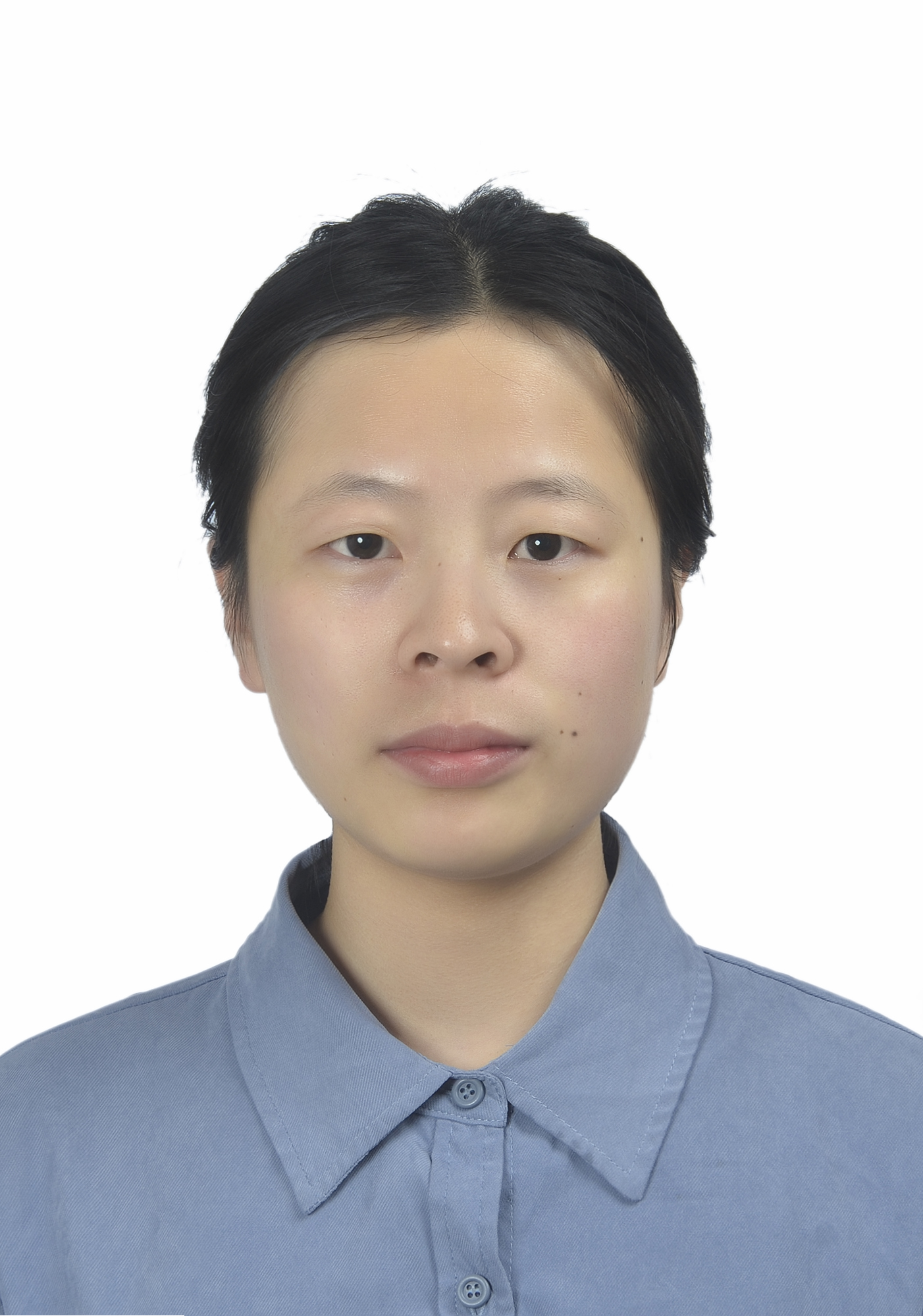
Resume
ZHAO Ying, Female, born in July 1993, native of Beipiao, Master’s Supervisor, Associate Prosessor. Her main research interests include ecohydrology and forest hydrology. Her work focuses on plant drought adaptation and the hydrological niche segregation of coexisting species, with an emphasis on elucidating the mechanisms underlying species coexistence and water-use strategies in water-limited ecosystems. She serves as a Youth Editorial Board Member of the Chinese Journal of Applied Ecology and is a reviewer for several leading international journals, including New Phytologist, Water Resources Research, and Functional Ecology.
Educational Experience
2016.09 – 2022.06 Ph.D. degree in soil Science from Institute of Soil and Water Conservation, Chinese Academy of Sciences, Yangling, Shaanxi Province, China. 2021.06 –2022.03,Visiting student, Utrecht University, Faculty of Geosciences,
Copernicus Institute of Sustainable Development; 2012.09 –2016.06, B.Sc. Degree in Soil and Water Conservation and Combating Desertification, Shenyang Agricultural University, Shenyang, Liaoning Province, China.
Work Experience
2024.08–present Associate Professor of Ecohydrology, Institute of Applied Ecology, Chinese Academy of Sciences, Shenyang, China; 2022.07–2024.07 Postdoctoral Researcher, College of Natural Resources and Environment, Northwest A&F University, Yangling, China.
Research Interests
Ecohydrology; Forest Hydrology; Plant Water Use Strategy; Plant Physiology
Research Projects
2024–2026: : Project Leader, Spatiotemporal Partitioning Mechanisms of Hydrological Niches among Coexisting Plants in Semi-arid Loess Regions, National Natural Science Foundation of China (Youth Program); 2025-2027: Subproject Leader, Tree Species Selection for Multifunctional Shelterbelts under Ecological and Drought Constraints, National Key Research and Development Program of China; 2025-2027: Subproject leader, Construction of Shelterbelt Networks in Mollisol Farmlands with Great Wall Pattern, National Key Research and Development Program of China; 2024-2027: Project Leader, Mechanisms of Mycorrhizal Fungi Influencing Water-Use Strategies of Pinus sylvestris var. mongolica under drought Conditions, "Lvye" Young Scientist Program, Institute of Applied Ecology, Chinese Academy of Sciences.
Selected Publications
1. Zhao, Y., Wang, L*., Zhang, Z.X., Zhu, J.J. 2026. Coupled hydrological niche segregation and the leaf economic spectrum explain the coexistence of woody species in a natural secondary forest. Journal of Ecology, 114, e70267.
2. Zhao, Y., Wang, L*., Chun, K.P., Ziegler, A.D., Evaristo, J*. 2024. Dynamic hydrological niche segregation: how plants compete for water in a semiarid ecosystem. Journal of Hydrology, 630, 130677.
3. Zhao, Y., Wang, L*. 2023. Coordination of available soil water content and root distribution modifies water source apportionment of the shrub plant Caragana korshinskii. Science of the Total Environment, 900, 165893.
4. Zhao, Y., Dai, J., Tang, Y., Wang, L*. 2022. Illuminating isotopic offset between bulk soil water and xylem water under different soil water conditions. Agricultural and Forest Meteorology, 325, 109150.
5. Zhao, Y., Wang, L*. Knighton, J., Evaristo, J., Wassen, M., 2021. Contrasting adaptive strategies by Caragana korshinskii and Salix psammophila in a semiarid revegetated ecosystem. Agricultural and Forest Meteorology, 300,108323.
6. Zhao, Y., Wang, L*. 2021. Insights into the isotopic mismatch between bulk soil water and Salix matsudana koidz trunk water from root water stable isotope measurements. Hydrology and Earth System Sciences, 25, 3975-3989.
7. Zhao, Y., Wang, L*. 2021. Determination of groundwater recharge processes and evaluation of the ‘two water worlds’ hypothesis at a check dam on the Loess Plateau. Journal of Hydrology, 595, 125989.
8. Zhao, Y., Wang, L*. 2018. Plant water use strategy in response to spatial and temporal variation in precipitation patterns in China: a stable isotope analysis. Forests, 9, 123.
