

RESEARCHERS
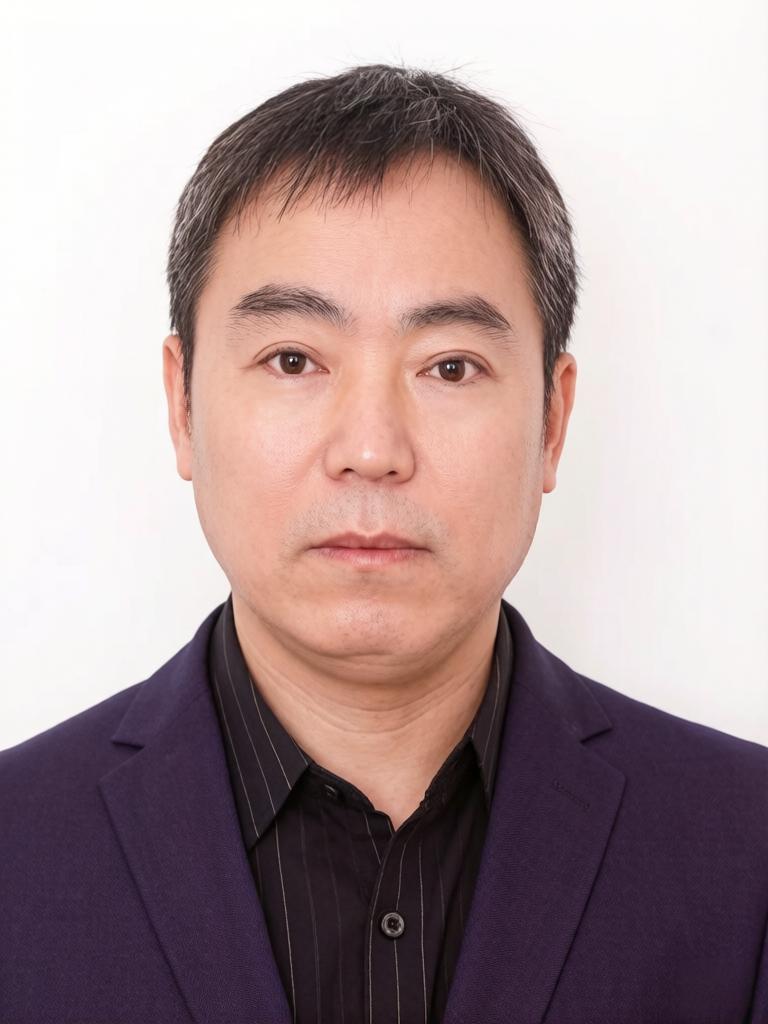
Resume
WU Jiabing, Male, born in 1977, native of Anhui Province. Ph.D., Researcher, Doctoral Supervisor.
He currently serves as Vice Chairman of the Forestry Meteorology Specialty Committee of the Chinese Society of Forestry, a Lifetime Member of the European Geosciences Union (EGU), and a member of the Liaoning Provincial Water Conservancy Science and Technology Committee. His research focuses on eco-climatology and eco-hydrology, with emphasis on the driving mechanisms of the carbon–water cycle in terrestrial ecosystems and eco-hydrological processes in arid regions. He has led four projects funded by the National Natural Science Foundation of China, two sub-projects under the National Key Research and Development Program, and one Sino-Swiss international cooperation project. He received a Second Prize of the Liaoning Provincial Natural Science Award (ranked 1st) and the Presidential Award of the Chinese Academy of Sciences. As first or corresponding author, he has published over 60 academic papers in leading ecology and environmental science journals, including Science China, Journal of Geophysical Research, and Soil Biology & Biochemistry, with a total citation count exceeding 3,000 (Web of Science). He currently serves as an editorial board member of the Chinese Journal of Applied Ecology and the Journal of Meteorology and Environment. He welcomes international collaboration in forest carbon–water flux monitoring, biogenic volatile organic compound (BVOC) emissions, dryland eco-hydrology, and climate-change impact assessment. He also invites inquiries from prospective international graduate students, postdoctoral fellows, and visiting scholars.
Educational Experience
2002.09–2006.06 Ph.D. in Ecology, Institute of Applied Ecology, Chinese Academy of Sciences, Shenyang, China.
1995.09–1999.06 B.S. in Soil and Water Conservation, Beijing Forestry University, Beijing, China.
Work Experience
2014.11–present Researcher, Institute of Applied Ecology, Chinese Academy of Sciences, Shenyang, China.
2014.03–2014.06 Visiting Scholar, INRA Center, France.
2006.11–2014.11 Associate Researcher, Institute of Applied Ecology, Chinese Academy of Sciences, Shenyang, China.
2007.04–2008.04 Postdoctoral Fellow, University of Greifswald, Germany.
1999.07–2006.11 Assistant Researcher, Institute of Applied Ecology, Chinese Academy of Sciences, Shenyang, China.
Research Interests
Eco-climatology; Eco-hydrology; Carbon–water cycling; Climate change response; Forest meteorology
Awards and Honors
2025, Second Prize of the Liaoning Provincial Natural Science Award (ranked 1st): Research on the Response and Adaptation of Major Tree Species and Their Communities in Northeast China to Climate and Environmental Changes.
Research Projects
1. 2023–2026: National Natural Science Foundation of China, Volatile Organic Compound Emissions from Plants in Northeast Temperate Primeval Forests and Their Ecological and Environmental Effects, Project Leader.
2. 2019–2022: National Natural Science Foundation of China, Ecological Characterization of Carbon Sequestration Allocation and Stable Carbon Isotopes in Old-Growth Forests — A Case Study of the Broad-leaved Korean Pine Forest in Changbai Mountain, Project Leader.
3. 2010–2012: National Natural Science Foundation of China, Impact and Mechanism of the Birch Effect on Soil Respiration in Broad-leaved Korean Pine Forests of Changbai Mountain, Project Leader.
4. 2007–2009: National Natural Science Foundation of China, Response and Adaptation Mechanisms of Trees in the Changbai Mountain Region to Enhanced UV-B Radiation, Project Leader.
5. 2020–2021: National Key Research and Development Program Sub-project, Evaluation of Scenic Beauty and Ecological Service Functions of Montane Vegetation Landscapes along the Winter Olympics Corridor, Sub-project Leader.
6. 2020–2022: National Key Research and Development Program Sub-project, Optimization of Forest Water Conservation Functions and Coordinated Enhancement of Carrying Capacity in the Changbai Mountain Region, Sub-project Leader.
7. 2020–2021: Sino-Swiss International Cooperation Project, Impact of Herbivorous Insects on Forest Carbon and Nitrogen Cycling in Changbai Mountain, Project Leader.
8. 2016–2017: Key Deployment Project of the Chinese Academy of Sciences, Classification, Assessment, and Development Strategy of the Northeast Ecological Security Barrier, Sub-project Leader.
9. 2014–2018: Strategic Priority Research Program of the Chinese Academy of Sciences (Category B), Soil Microbial Composition and Horizontal Spatial Distribution Patterns in Typical Forests, Sub-project Leader.
10. 2013–2015: National Science and Technology Support Program, Soil and Water Loss Control and Vegetation Restoration Technology for Rock Dump Sites, Sub-project Leader.
Selected Publications
1. Jie Lai, Yuan Zhang, Anzhi Wang, Wenli Fei, Yiwei Diao, Rongping Li, and Jiabing Wu*. 2025. FLAML version 2.3.3 model-based assessment of gross primary productivity at forest, grassland, and cropland ecosystem sites. Geoscientific Model Development, 18, 5115–5142.
2. Yanru Sun, Anzhi Wang, Lidu Shen, Yage Liu, Yuan Zhang, Rongrong Cai, Wenli Fei, Jiabing Wu*. 2025. Spatiotemporal variations in dissolved organic carbon in China's major river basins and their associations with climate change and human activities. Carbon Balance and Management. https://doi.org/10.1186/s13021-025-00387-0
3. Weibin Li, Changjie Jin, Dexin Guan, Qingkui Wang, Anzhi Wang, Fenghui Yuan, Jiabing Wu*. 2015. The effects of simulated nitrogen deposition on plant root traits: A meta-analysis. Soil Biology and Biochemistry, 82: 112–118.
4. Jiabing Wu, Lars Kutzbach, Daniel Jager, et al. 2010. Evapotranspiration dynamics in a boreal peatland and its impact on the water and energy balance. Journal of Geophysical Research, 115(G04038): doi:10.1029/2009JG001075.
5. Jiabing Wu, Dexin Guan, Miao Wang, et al. 2006. Year-round soil and ecosystem respiration in a temperate broad-leaved Korean Pine forest. Forest Ecology and Management, 223(1–3): 35–44.
