

RESEARCH PLATFORMS
Northeast Biological Herbaria
The Northeast Biological Herbaria (IFP) was founded in 1954. Its predecessor is the herbarium of the Institute of Forestry and Soil, Chinese Academy of Sciences. It was founded under the leadership of the famous botanist Prof. Liu Shen-E, who is the founder of the institute. In 1999, with the approval of the Chinese Academy of Sciences, the "Northeast Biological Herbaria" was established on the basis of the original Herbarium. Since 2006, the Institute entered the third phase of Innovation Project of the Chinese Academy of Sciences, the Northeast Biological Herbaria officially became an independent research support department. IFP is a comprehensive herbaria with the largest specimens in Northeast China, and the number of specimens ranks in the forefront of the herbaria in China. The building area of the herbaria is 1880 square meters. There are 620,000 specimens of vascular plants, bryophytes, lichens, higher fungi and insects. At present, there are 19 scientific research and supporting personnel who mainly engaged in classification, systematics and evolution, diversity investigation and protection, biological resource development and utilization, etc. As an important scientific research support department of the institute, it actively strives for, participates in and supports the application and implementation of national projects. Since its establishment, more than 40 scientific research achievements have been awarded by the national, provincial and ministerial level, more than 80 monographs have been published, and more than 1000 papers have been published. In recent years, relying on the "National Primary and Secondary School Students' Research and Practice Education Base", Liaoning Province, Shenyang City and other popular science education bases, we take the advantages of scientific research and popular science resources in the field of natural ecology to carried out a variety of popular science activities. We will adheres to the regional positioning of focusing on the northeast region, facing the whole country and radiating the neighboring countries in Northeast Asia, extensively collects, preserves and utilizes the biological species resources, serves scientific research and assists the government's decision-making, and gradually builds an important base with multiple social service functions.
Curator: Prof. Hai-Sheng Yuan (mainly research on taxonomy of Basidiomycocetes, molecular systematics, fungal ecology, etc.)
Address: No.72 Wenhua Road, Shenyang City, Liaoning Province, China (110016)
Tel: 024-83970347
Email: hsyuan@iae.ac.cn
Deputy curator: Prof. Wei Cao (mainly research on taxonomy of vascular plant, systematics, flora, etc.)
Address: No.72 Wenhua Road, Shenyang City, Liaoning Province, China (110016)
Tel: 024-83970334
Email: caowei@iae.ac.cn
Website of The Northeast Biological Herbaria (IFP): http://ifp-cas.cn/
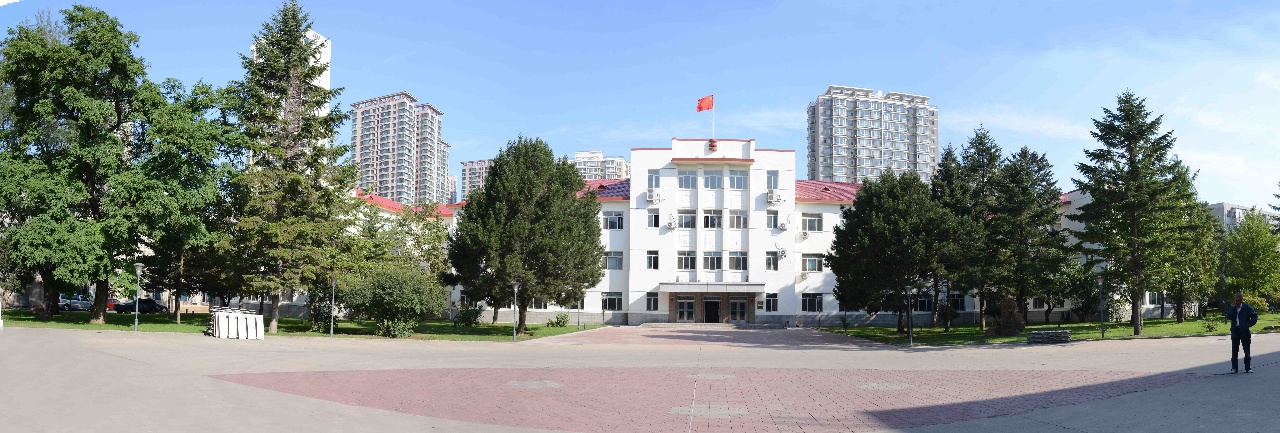
There are 620,000 specimens of vascular plants, bryophytes, lichens, higher fungi, insects and so on, and more than 20,000 microbial strains are preserved in the Northeast Biological Herbaria.
In the early stage of the establishment of the herbaria, more than 10,000 specimens of 2,000 vascular plant species were preserved, and these specimens were collected from the Northeast of China between 1950 and 1953 by Prof. Liu Shen-E. After that, he has carried out a comprehensive plant survey for the Great and Small Xing'an Mts., Changbai Mts., Qianshan Mts., Liaodong mountains and the Northeast Plain. Since 1990s, investigation for counties and floristic research of plant have been carried out gradually. At present, there are 330,000 vascular plant specimens (around 3100 species) of woody and herbaceous plants of Northeast China, including 415 model specimens of 368 new species. It covers all woody plants and more than 90% herbaceous plants of Northeast China.
Bryophyte research began in 1957, specimen collection mainly conducted in the eastern part of Inner Mongolia, the Great and Small Xing'an Mts., Changbai Mts., the Northeast Plain and coastal islands. After the 1970s, the research emphasis began to turn to the whole country. It has established "Northeast Asia Bryophyte Research Center", which is the largest bryophyte herbarium in Northeast China, ranking the top three in the country, with the widest collection area. At present, there are 125,000 bryophyte specimens from 34 provinces and autonomous regions in China, including the type specimens of 115 new species, as well as specimens collected and exchanged from Northeast Asian countries such as Japan, South Korea, Russia, etc.
The taxonomy of higher fungi began in 1956, which mainly focused on Agaricomycetes, Polypores and rust fungi in Northeast China. After 2000, we focused on the classification and systematics of wood inhabiting fungi. More than 240 nature reserves, forest parks and forest farms in 34 provinces and autonomous regions of China were extensively investigated. In addition, more than 20 countries and regions in Europe, North and South America, Asia, Africa and Australia were also included in the collection of higher fungi. At present, more than 40,000 specimens have been preserved, including the 200 type specimens of new species and 65 type specimens from foreign exchange.
Lichen research began in 1962. Lichen specimens were collected from Heilongjiang, Jilin, Liaoning and the northeast of Inner Mongolia. At present, 30,000 specimens are preserved.
The research on insect taxonomy in Northeast Biological Herbaria have been carried out at the beginning of the institute. The collection of insect include two parts: about 50, 000 specimens are the forest pest collection which collected before 1993; the other part is the water beetles which collected in more than 800 localities, 20 provinces or autonomous regions since the cooperation was established between Institute of Applied Ecology, Shenyang and Natural History Museum, Vienna, Austria in 1993, and now more than 20, 000 specimens of water beetles including 567 type specimens are preserved.
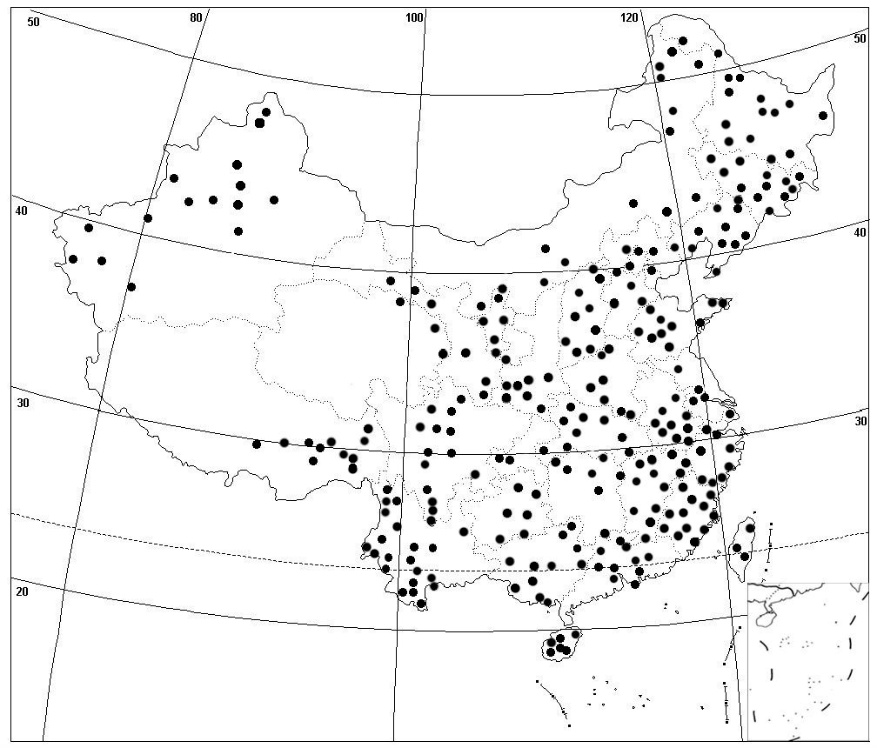
Locations of field investigation and specimen collection
