

RESEARCH NEWS
-
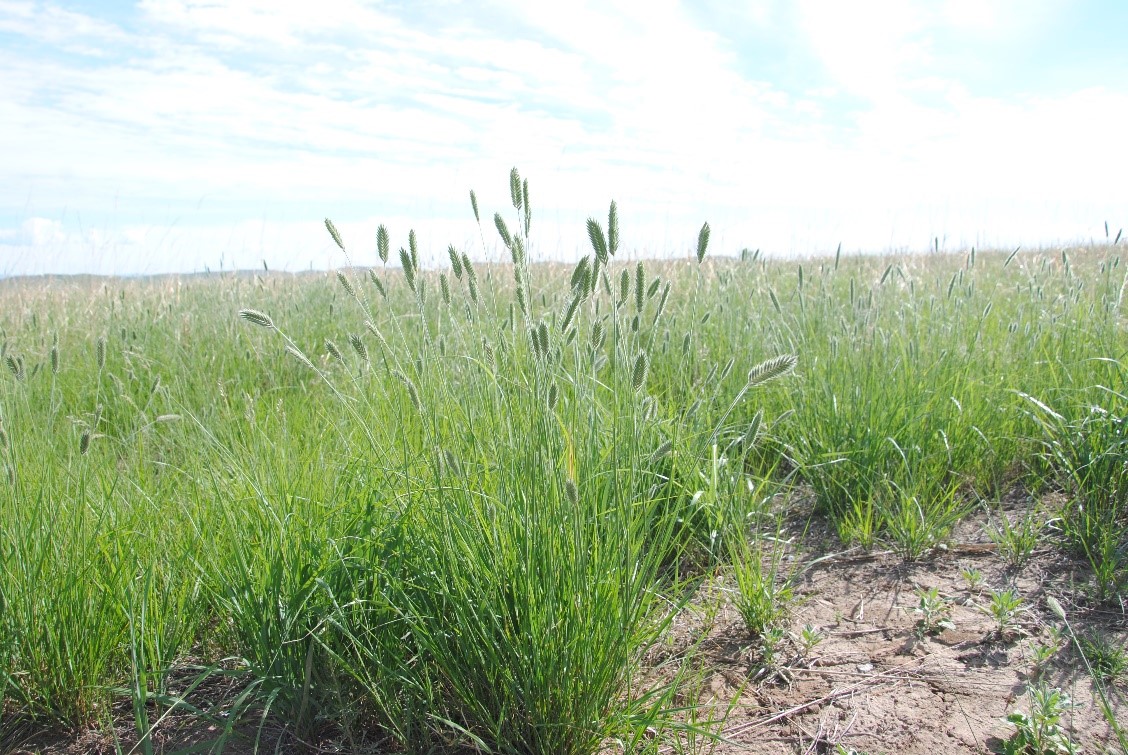 Variable Responses of Seed Traits to Extreme Drought Do Not Preclude Their Strong Relationships with Drought SensitivityTo address this knowledge gap, a research team from Institute of Applied Ecology of Chinese Academy of Sciences reduced growing season precipitation amount for four years across five grasslands of North China and assessed the responses of seed traits and grassland productivity to extreme drought. Surprisingly, the researchers found that there are variable effects of extreme drought on community seed trait means and diversity over space and time. However, the researchers observed a negative relationship between drought-induced reductions in grassland productivity and one key seed trait, mean seed-coat thickness.Sep 01, 2022
 -
Release of Nitric and Nitrous Oxides in Relation to Soil Moisture in Subtropical Forests in Southwest ChinaDr. Kang Ronghua, research scientist of the Institute of Applied Ecology of the Chinese Academy of Sciences (CAS), together with Thomas Behrendt of the Max Planck Institute for Biogeochemistry and Peter Dorsch of the Norwegian University of Life Sciences, collected well-drained hill slope soils (HS soils) and wet soils of the groundwater discharge zone (GDZ soils) from a subtropical forest in southwest China, and evaluated the rates of NO and N2O release following soil drying.Aug 25, 2022
-
Blue Light is Key Factor Affecting Litter PhotodegradationDr. WANG Qingwei from the Institute of Applied Ecology (IAE) of the Chinese Academy of Sciences (CAS), together with his foreign colleagues, has revealed that blue light is the key factor affecting litter photodegradation.Aug 25, 2022
-
Researchers Suggest Better Understanding of Below-ground Carbon Allocation and Its Efficiency for Nutrient AcquisitionPlants allocate large amounts of photosynthetic carbon metabolites to roots and soil and thereby rely on the root-soil-microbe interactions to acquire soil nutrients such as nitrogen (N) and phosphorus (P) for aboveground growth.Aug 23, 2022
-
Non-growing-season Rhizosphere Priming Effect MattersProf. Wang Peng and assistant researcher Lu Jiayu from the Underground Ecological Process Group of the Institute of Applied Ecology (IAE) of the Chinese Academy of Sciences (CAS) recently quantified RPEs of four perennial herbs in a non-growing season, that is, after leaf senescence and before shoot regrowth.Aug 23, 2022
-
Scientists Identify Key Genes and Enzymes Responsible for Microbial Degradation of Chlorimuron-EthylProf. ZHANG Huiwen, Prof. XU Mingkai and doctoral research student YU Zhixiong are researchers from the Microbial Resources and Ecology Group of the Institute of Applied Ecology (IAE) of the Chinese Academy of Sciences (CAS), who recently performed a whole-genome sequencing on Chenggangzhangella methanolivorans CHL1, a CE-degrading strain first obtained by the same group of researchers.Jul 27, 2022
-
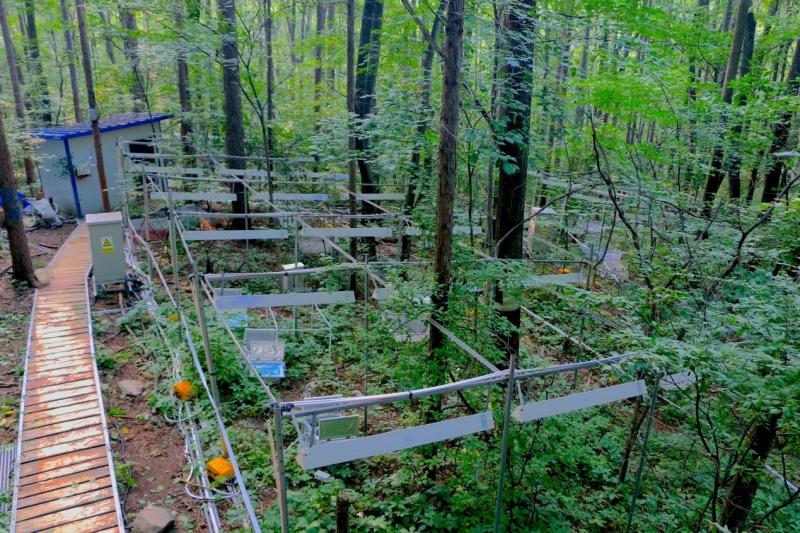 Ecosystem-scale Forest Soil Warming with Infrared Heater ArraysThis ecosystem-scale warming experiment is conducted in Qingyuan Forest CERN, Northeast China, leaded by Prof. Fang Yunting from the Institute of Applied Ecology, Chinese Academy of Sciences. The primary goal of the warming experiment is to examine how and through what mechanisms tree growth and soil carbon cycling respond to warming.Jul 26, 2022
 -
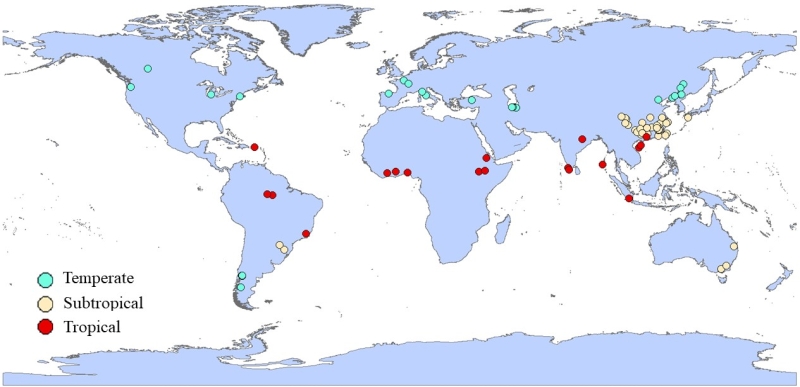 Which Indicators Can Assess Forest Soil Quality Based on Global Meta-analysisDr. Yang Kai and Diao Mengmeng from the Institute of Applied Ecology, Chinese Academy of Sciences, under the guidance of Prof. Zhu Jiaojun, together with Yang’s colleagues Dr. Lu Deliang and Dr. Zhang Weidong, have revealed forest soil quality through comparison between paired plantations versus natural forests, using natural forests as references.Jul 14, 2022
 -
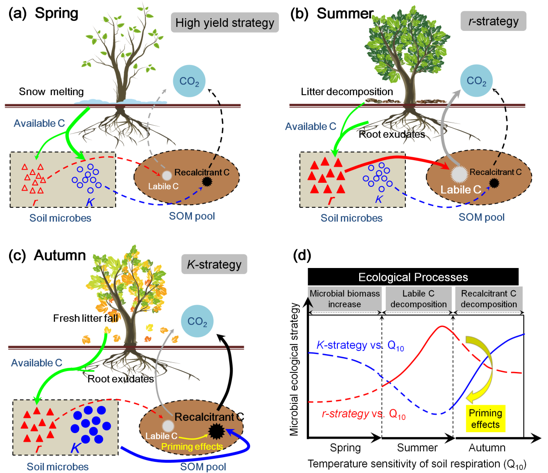 The Underlying Microbial Mechanisms Driving the Temperature Sensitivity of Soil Respiration Varied by SeasonProf. LI Hui and her colleagues from the Institute of Applied Ecology of the Chinese Academy of Sciences recently revealed latitudinal and seasonal variations in temperature sensitivity of soil respiration (Q10) by cultivating the soil samples collected from northern, central and southern regions of the broad-leaved Korean pine mixed forest (BKPF) in China.Jul 12, 2022
 -
Scientists Develop a Microbial Consortium for Bio-degradation of Chlorimuron-ethylProf. ZHANG Huiwen, Prof. XU Mingkai and doctoral student LI Xiang are researchers from the Microbial Resources and Ecology Group of the Institute of Applied Ecology (IAE) of the Chinese Academy of Sciences (CAS). This group of researchers recently established a microbial enrichment culture system using the soil contaminated with CE and obtained a microbial consortium capable of degrading CE.Jul 06, 2022
