

RESEARCH NEWS
-
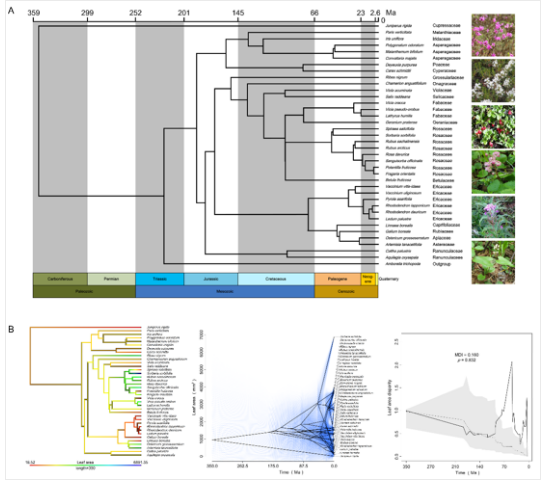 How Functional Traits Diversified and Phylogenetically Correlated for Co‐occurring Understory Species in Boreal Forest?LIU Bo from Institute of Applied Ecology, Chinese Academy of Sciences, together with his collaborators, utilized phylogenetic comparative analysis to examine how functional traits diversified and phylogenetically correlated for co‐occurring understory species. The researchers measured six functional traits for 37 boreal understory species in the field, including leaf area, leaf carbon content, leaf dry matter content, leaf nitrogen content, plant height, and specific leaf area. They constructed a phylogenetic tree with three loci (rbcL, matK, and trnH-psbA) to perform phylogenetic comparative analyses.Apr 22, 2022
 -
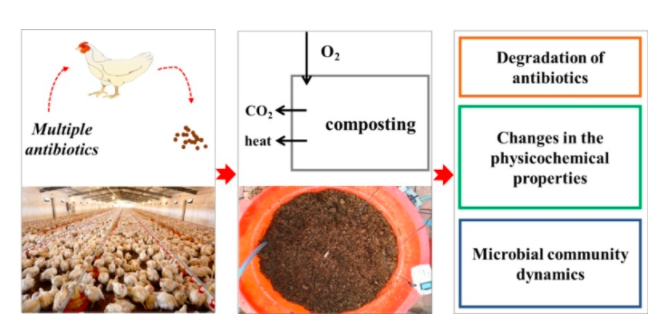 Transfer and transformation of heavy metals and antibiotics in the process of broiler breeding-manure-compostingA research team leading by CHEN Xin from the Institute of Applied Ecology, Chinese Academy of Sciences examined the accumulation of metal elements and the fate and depletion of DOX and GAT during the composting process of broiler manure.Apr 02, 2022
 -
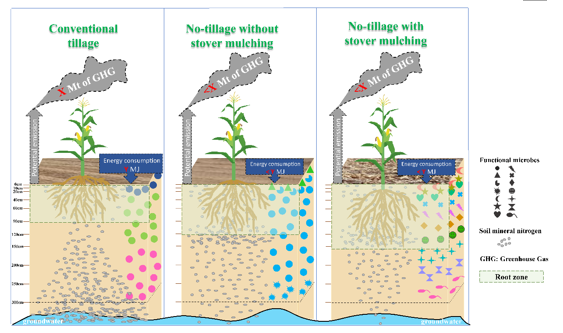 Conservation Tillage Regenerates Healthy Deep Soil Towards Sustainable AgricultureA research team leading by Liang Chao from the Institute of Applied Ecology, Chinese Academy of Sciences recently evaluate the impact of farming tillages on 3-meter soil profiles after 10-year manipulations in a Mollisol of Northeast China and provide an underneath mechanism on how long-term conservation tillage regenerate deep healthy soil.Mar 04, 2022
 -
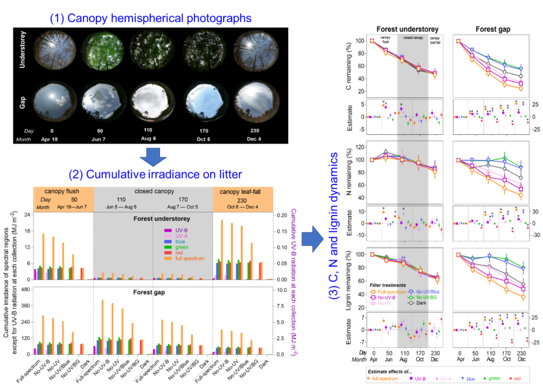 The Impact of Solar Radiation on Litter C and N Dynamics Depending on Forest Canopy Structure and PhenologyWANG Qingwei from the Institute of Applied Ecology, Chinese Academy of Sciences (CAS) conducted a large appropriate spectral attenuation experiment, collaborating with a couple of senior ecologists. They calculated the contribution of solar spectral irradiance to C and N dynamics in the understorey and an adjacent gap created by a clear-cut in a temperate deciduous forest.Mar 02, 2022
 -
Researchers Identify Toxicological Mechanism That Regulates Polystyrene Nanoplastics Induced Apoptosis and Inflammatory Response in Human Alveolar Epithelial CellsNanoplastics are tiny plastic particles that can easily enter human lungs through breathing contaminated air. By damaging alveolar epithelial cells, nanoplastic particles can enter the blood system and may cause a wide range of toxic effects and pulmonary disorders.Feb 24, 2022
-
The Natural Regeneration Preference of Tree Species after Logging Provides New Insights into Restoring Temperate Secondary ForestsIn a study published in Ecological Processes, a research group led by Prof. YAN Qiaoling from the Institute of Applied Ecology (IAE), Chinese Academy of Sciences explored the effects of logging on the trade-off between seed and sprout regeneration of dominant woody species in secondary forests of Northeast China.Feb 22, 2022
-
Nitrogen Enrichment Reduced Aboveground Stability but not Belowground StabilityA research group leading by Prof. Xiao-Tao Lü, from the Institute of Applied Ecology, Chinese Academy of Sciences, conducted a N addition manipulation experiment in the Erguna Forest-Steppe Ecotone Research Station, Inner Mongolia. They explored the impacts of N addition on the temporal stability of ANPP, BNPP, and NPP and their associated mechanisms at two different spatial scales.Feb 17, 2022
-
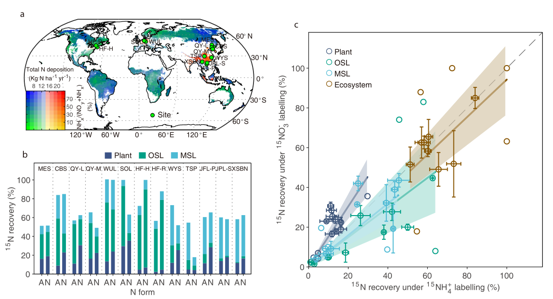 Researchers Quantify Retention of Deposited Ammonium and Nitrate and Its Impact on Global Forest Carbon SinkTo address the problems outlined above, Prof. Yunting Fang’s laboratory at the Institute of Applied Ecology, Chinese Academy of Sciences (CAS), initiated a Chinese forest ecosystem 15N tracer network. Based on the results in nine ecosystem-scale paired 15N-tracer experiments from China and four earlier studies in temperate forests in the US and Europe, Prof Fang’s laboratory and Prof Peng’s laboratory (from Peking University) have led an investigation on the fate of atmospheric N deposited ammonium and nitrate into forests and their contribution to forest C sinks.Feb 15, 2022
 -
Evolutions of Distribution and Driving Factors of Coastal Wetland in Bohai Bay, China.A research team from the Institute of Applied Ecology, Chinese Academy of Sciences recently obtained the annual distribution of Suaeda salsa (S. salsa) using RS data in past 30 years in Bohai Bay, China. And the influencing factors of S. salsa changes were analyzed. Furthermore, taking Liao River Delta estuary wetland as an example, the changes of land use before and after the utilization of wetland and the driving factors of ecological environment impacts were analyzed.Jan 17, 2022
-
Water Security Status in Northeast China Deteriorates from 2005 to 2015, Researchers SayA research assessing water-related ecosystem services is recently done in northeast China by a research team led by Professors Yu Dapao and Dai Limin from the Institute of Applied Ecology, Chinese Academy of Sciences.Jan 06, 2022
