

RESEARCH NEWS
-
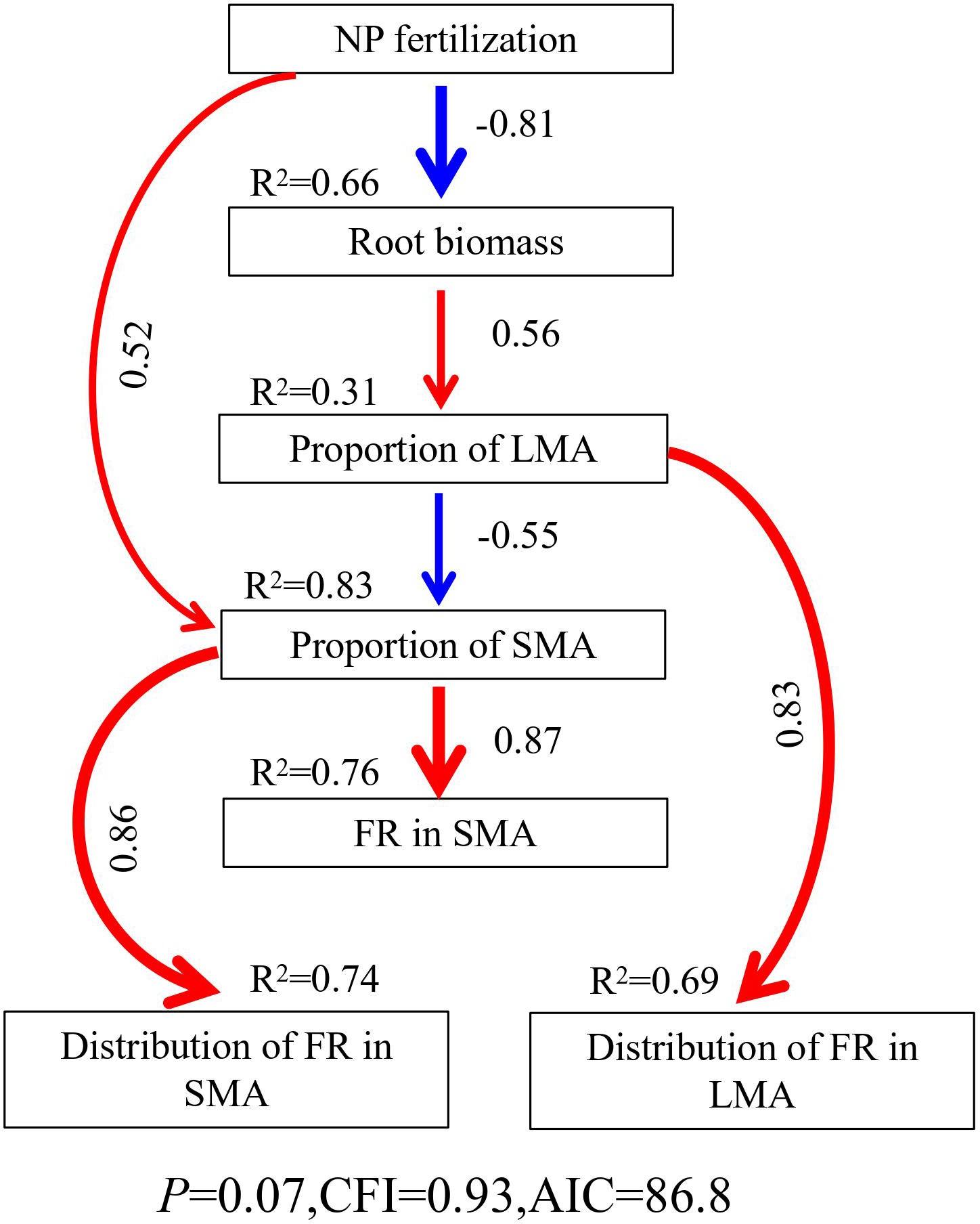 Fertilization Affects Soil Microbial Biomass and Their Residue Distribution by Changing Root BiomassA research team led by WANG Qingkui from the Institute of Applied Ecology, Chinese Academy of Sciences recently conducted a six-year fertilization manipulation experiment to explore the impacts of N and P fertilization on soil microbial community and their residues at aggregate scales in subtropical P-deficient plantation soil.Jan 04, 2022
 -
The Species Diversity, Phylogeny and Evolution Regularity of Hydnaceae have been Enriched and RevealedDr. Yuan Haisheng and their team from the Institute of Applied Ecology (IAE) of the Chinese Academy of Sciences conducted a systematic study of the Hydnaceae, especially the umbelliform fungi.Dec 31, 2021
-
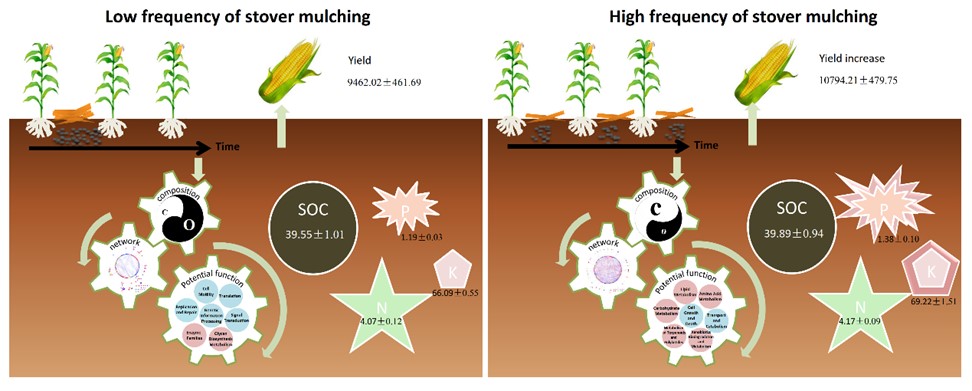 Frequent Stover Mulching Builds Healthy Soil through Soil Bacterial CommunitySoil health, which refers to a soil’s capacity to function as a vital living system according to its potential and changes over time, is the foundation of productive, sustainable agriculture. Although conservation tillage, such as no-till and retention of crop residues, has been widely performed in global agricultural ecosystems to maintain soil health at a satisfactory state. However, it is unclear how the quantity and frequency of residue retention influences soil ecosystem and it remains elusive what the underlying mechanisms are that associated with the soil microbiomes.Dec 30, 2021
 -
Tree Growth Response to Soil nutrients and Neighborhood Crowding Varies between Mycorrhizal TypesTree growth is an important part of forest dynamics, and revealing its driving factors is the basis for predicting forest community dynamics. During the growth and development of plants, the symbiosis between trees and mycorrhizal fungi (e.g. arbuscular mycorrhizal (AM), ectomycorrhizal (EM) and dual-mycorrhizal (AEM)) can improve species ability to absorb nutrients and adapt to the local environment, which ultimately results in the difference of species response to biotic and abiotic factors. However, it remains unclear how species with different mycorrhizal associations exhibit growth responses to local abiotic and biotic gradients.Dec 21, 2021
-
Removal of Roots Has Greater Impacts on Forest Soil Microbial Biomass than Removal of Aboveground LitterEnvironmental changes and human activities may change above- and underground litter inputs to the soil, which can regulate the sequestration and storage of soil organic carbon by changing community composition and activity of soil microbes in forest ecosystems.A number of studies have examined the impacts of removing forest litter on soil microbes. However, the results of these studies are quite variable, which greatly limits their potential to predict soil organic carbon dynamics.Dec 14, 2021
-
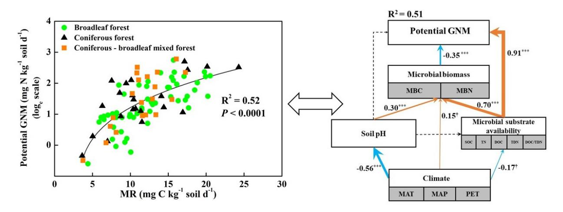 Gross Nitrogen Mineralization Is Non-linearly Correlated with Microbial Respiration along Forest TransectNitrogen (N) in inorganic form is the main source for plant and microbial growth. Thus gross nitrogen mineralization, a microbial process converting organic nitrogen to inorganic nitrogen, is pivotal for plant productivity. “Until now, variation in gross nitrogen mineralization of forest soils at a large scale and influencing factors are still unknown, and this knowledge is very critical because forests are the largest terrestrial ecosystem on the earth,” said Prof. WANG Peng from the Institute of Applied Ecology of the Chinese Academy of Sciences.Dec 10, 2021
 -
Different Stages of Freeze–thaw Cycles Shape Different Microbial CommunitiesAs a zonal phenomenon of soil heat dynamics in high latitude and high altitude areas, freeze–thaw cycle strongly affects soil microbial process, which has attracted more and more researchers' attention in recent years. However, there are few studies on the effects of different stages of freeze–thaw cycle on the composition and function of soil microbial community, and our understanding of this field needs to be improved.Dec 07, 2021
-
Denitrification is Dominant Pathway for Nitrogen Removal from Coastal SedimentsHuman activities have caused a large amount of reactive nitrogen (N) to enter coastal and marine ecosystems, which changes N biogeochemical cycling and leads to a series of ecological problems in coastal areas such as eutrophication, hypoxic zone expansion, algal blooms and the increase in greenhouse gas emissions. Coastal sediments are vital for the removal of N from marine ecosystems. However, what factors control the regional-scale sedimentary N removal process is scarcely known.Dec 01, 2021
-
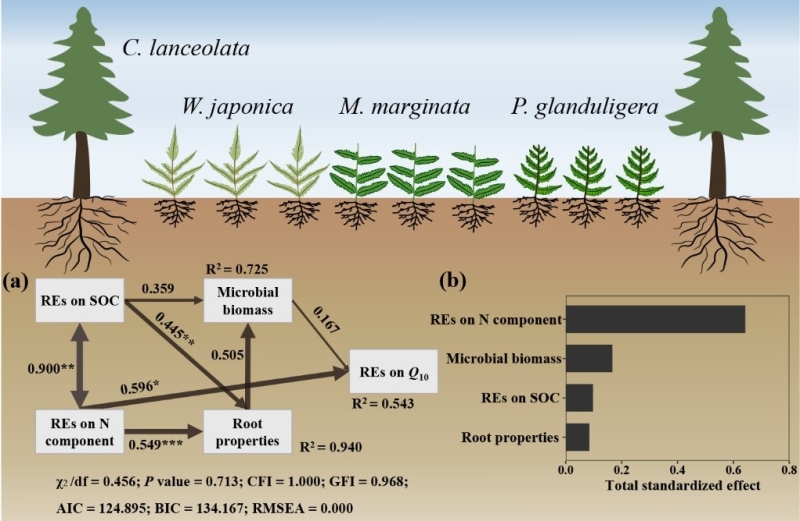 Decomposition of Rhizospheric Soil Organic Carbon is More Sensitive to Climate Warming than Non-rhizospheric SOCThe rhizosphere is the narrow region where plant roots and the soil interact vigorously and intensive microbial metabolism occurs. The properties of rhizosphere soil are usually different from that of non-rhizosphere soil. This is called rhizosphere effects (REs).Dec 01, 2021
 -
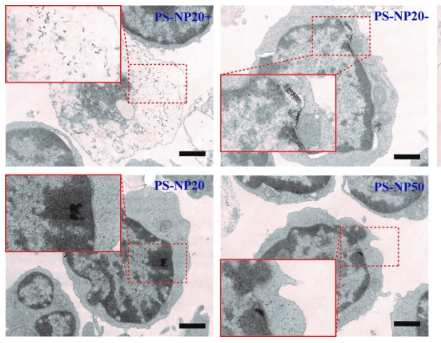 Polystyrene Nanoplastics Inhibit Key Signaling Pathways for the Activation of Immune T cellsNanoplastics is a new type of environmental pollutant. Its particles can easily enter the bodies of animals through diet and breathing, and affect the physiological functions of organisms. However, there are no effective measures for detecting and eliminating nanoplastic particles that are now widely distributed in natural environment.Nov 15, 2021
