

RESEARCH NEWS
-
How Sulphur Deposition Affects Soil Nematode Community StructureThe researchers measured chemical and biological properties of the soil samples and found that S addition had a significant impact on richness and diversity of soil nematodes, but not on total abundance of soil nematodes and the relative abundance of Cervidellus and Aphelenchus (the dominant nematode species).Mar 30, 2021
-
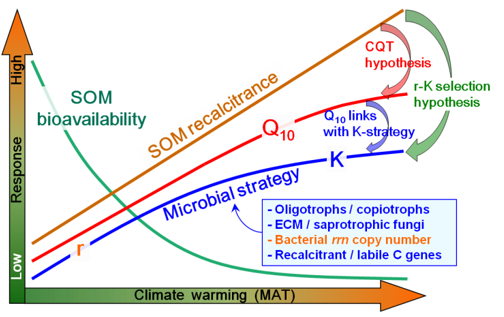 Scientists Found Eco-strategies of Soil Microbes Control Temperature Sensitivity of Organic Matter DecompositionTo test this hypothesis, Dr. Hui Li and her colleagues from the research group of Soil Chemistry in Institute of Applied Ecology, CAS analyzed Q10 of SOM decomposition in 13 sites of natural temperate mixed forests along a mean annual temperature (MAT) gradient of -1.9 to 5.1 °C.Mar 26, 2021
 -
Fatty Acid Methyl Ester-based Microemulsion Effectively Increases the Polycyclic Aromatic Hydrocarbon (PAH) Removals in SoilsIn a study published in Journal of Hazardous Materials, a research group led by GONG Zongqiang from the Shenyang Institute of Applied Ecology of the Chinese Academy of Sciences (CAS) proposed a fatty acid methyl ester-based microemulsion to remediate polycyclic aromatic hydrocarbon (PAH) contaminated soils.Mar 09, 2021
-
 Scientists Have Series of Discoveries on Soil Microbial Carbon Pump and Carbon Storage MechanismThe mechanism of soil carbon turnover and sequestration is a hot and difficult point in carbon biogeochemical cycling research. The improvement of soil carbon sink function is closely related to key issues such as food security, water body quality, biodiversity maintenance, land health conservation (e.g., the black soil protection in particular), the international development strategy of Carbon Neutrality, and global climate crisis.Feb 09, 2021
 -
Researchers Reveal How Nitrogen and Water Addition Influence Inorganic Phosphorus Components in the Soil of Semi-arid GrasslandsPhosphorus is a limiting nutrient affecting the primary productivity of terrestrial ecosystems. In semi-arid grasslands, soil phosphorus mainly exists in the form of mineral-bound inorganic phosphorus (up to 75% of total phosphorus in calcium-rich soil), which is an important soil phosphorus pool but is difficult to be directly used by plants.Jan 22, 2021
-
How Do Aggregates of Different Sizes Mediate Soil-Plant Relationship?The researchers (Associate Prof. Wang Ruzhen, Prof. Jiang Yong and Ph.D. student WU Hui) found that there was a significant correlation between plant characteristics (biomass and species richness) and macro-aggregate properties (ratio of available nutrients to eubacteria) under the nitrogen addition and mowing treatment.Jan 22, 2021
-
 Assessment of the Spatial Ecological Risk and Human Health Risk for Contaminated Soil in Oiled FieldsSoil total petroleum hydrocarbon (TPH) and Polycyclic aromatic hydrocarbons (PAHs) pollution in oiled fields is a worldwide environmental problem. Accumulation of TPHs and PAHs in the soils was led by the crude oil exploitation. It caused the spatial ecological risk and human health risk.Jan 08, 2021
 -
Researchers Establish An Advanced Abio-combination Method for Rapid As Removal from As-Mn-rich AMD and Stable Final SolidsIn a new study published in Journal of Hazardous Materials on January 5, a research group led by Prof. JIA Yongfeng and WANG Shaofeng from Institute of Applied Ecology, Chinese Academy of Sciences has made great progress in an advanced abiotic oxidation-precipitation technology for fast efficient As removal from high-As(III)-Mn(II) AMD and low As-leaching solid waste.Jan 05, 2021
-
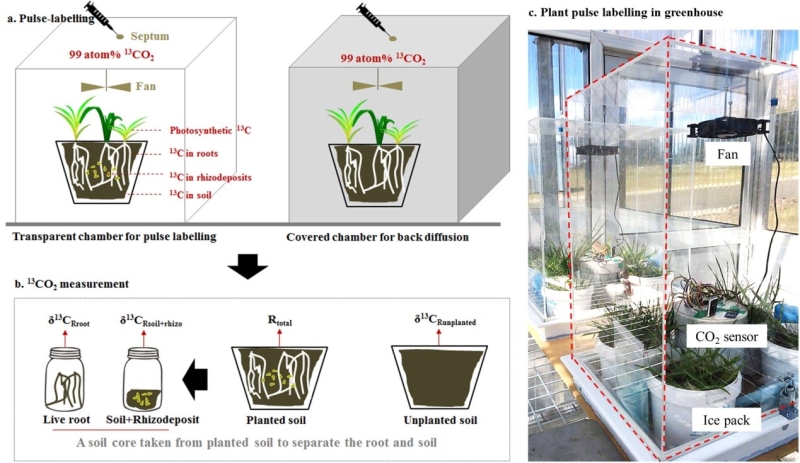 A Novel Method to Quantify the Decomposition of RhizodepositsRecently, Prof. Yong Jiang’s Lab from the Institute of Applied Ecology of Chinese Academy of Sciences, used a novel approach to separate soil respiration into root respiration, decomposition of rhizodeposit C, and decomposition of soil organic C (SOC).Dec 28, 2020
 -
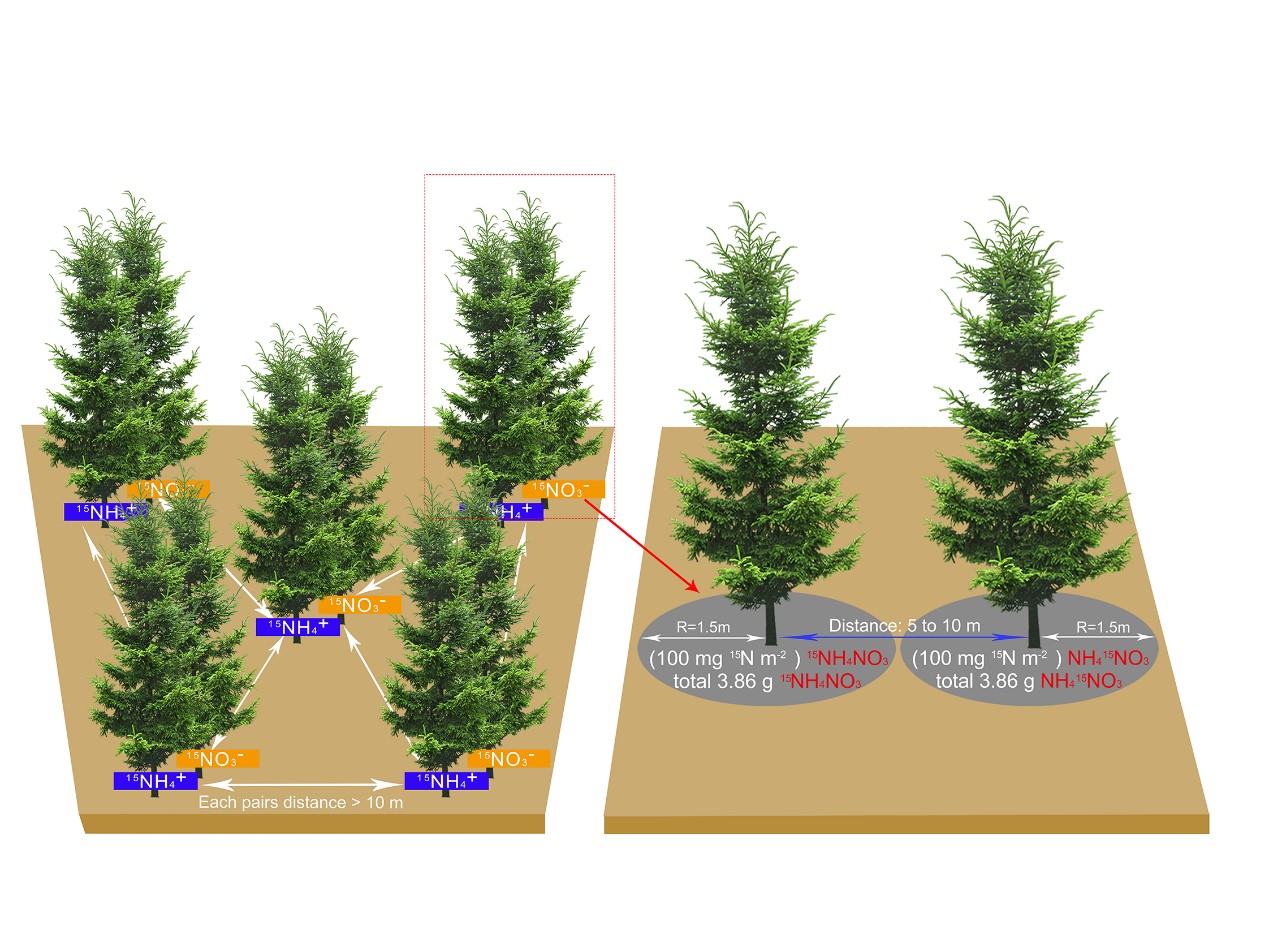 Scientists Find the Nitrogen Uptake Strategy of Mature Conifers in Northeast ChinaProf. Yunting Fang’s lab from the Institute of Applied Ecology of Chinese Academy of Sciences, therefore, first conducted an in situ whole tree 15N labelling experiment (15NH4+ vs. 15NO3-) (Fig 1) to investigate the N uptake strategy of four mature conifers (Pinus koraiensis, Pinus Sylvestris, Picea koraiensis, and Larix olgensis) in Northeast China.Dec 14, 2020
