

RESEARCH NEWS
-
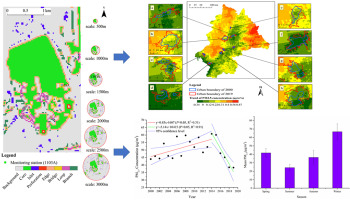 Researchers Investigate Multi-scale Relationships Between Urban Green Infrastructure Landscape Patterns and Atmospheric PM2.5 ConcentrationsThe results of this study deepen the understanding of the relationship between UGI landscape patterns and PM2.5 concentrations, which will provide a scientific guidance for future urban planning and the prevention and control of PM2.5 pollution.Oct 26, 2021
 -
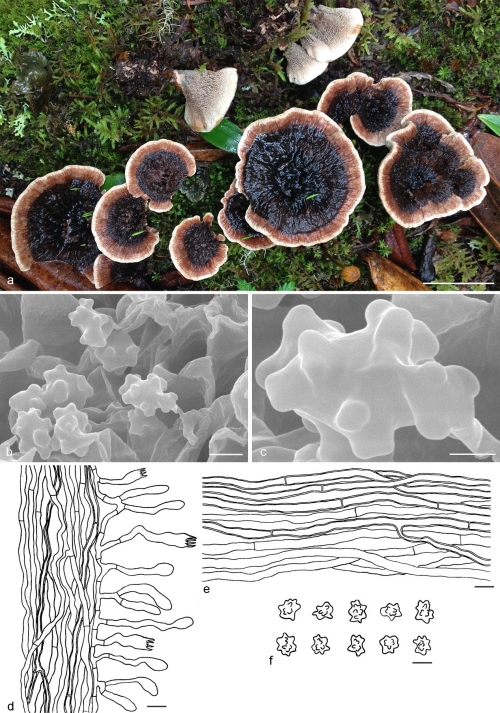 Researchers Elucidate Endangered Stipitate Hydnaceous Fungi in ChinaThe genus Hydnellum, an important component of stipitate hydnaceous fungi, is a group of soil-inhabiting Basidiomycota with a spinulose hymenium. They can form a mutually beneficial symbiosis with plant roots and receive carbon sources from and transport mineral elements, such as nitrogen and phosphorus to their host plants, which occupies a vital position in the formation and rapid colonization of host plant resistance, promotion of forest vegetation restoration and forest ecosystem stability.Oct 11, 2021
 -
To Enhance or Suppress? The Double-edged Sword of Superantigen in Tumor ImmunotherapyTumor immunotherapy is the most promising research field in the last years. By re-awakening and enhancing the immune system to fight cancer, such strategies have attracted the attention of many researchers. Drugs such as PD-1/PD-L1 specific antibodies have been developed and achieved impressive clinical responses. However, many cancer types still do not respond to immunotherapy because of immune tolerance and resistance.Oct 09, 2021
-
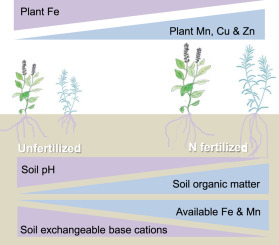 Effects of Different Nitrogen Compounds Addition on Plant-soil Micronutrients in a Meadow SteppeRecently, Prof. Yong Jiang’s Lab from the Institute of Applied Ecology of Chinese Academy of Sciences, examined the effects of different N compounds of (NH4)2SO4, NH4NO3, and urea with and without mowing on micronutrient Fe, Mn, Cu, and Zn in soil-plant systems in a meadow steppe.Sep 26, 2021
 -
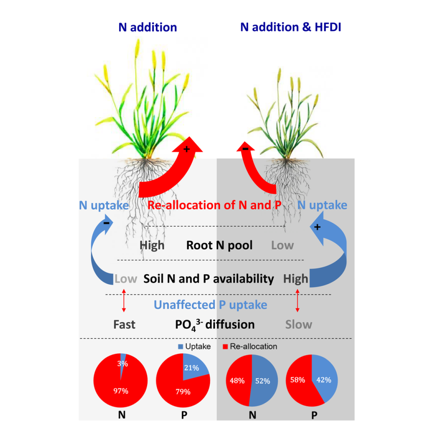 A Novel Dual-labelling Technique to Quantify the Contribution of Root Nutrient Re-allocation to Plant Regrowth after DefoliationNitrogen (N) and phosphorus (P) are co-limiting nutrients of net primary productivity in most terrestrial ecosystems. To satisfy N and P demand for shoots, plants take up nutrients from the soil but also recycle nutrients internally through resorption and re-allocation from storage organs (e.g., roots).Sep 14, 2021
 -
 Interaction Between Climatic Factors and Timescale Affect the Result of Assessing Extreme Drought in ChinaRecently, Landscape Processes Group from the Institute of Applied Ecology (IAE) of the Chinese Academy of Sciences (CAS) revealed how climate and timescale individually and interactively alter EDF at multiple temporal and spatial scales in conterminous China.Aug 23, 2021
 -
How Does Harvest Intensity Affect the Sustainable Utilization of Non-timber Forest Products?Non-timber forest products (NTFPs) are very important for local forest dwellers to increase their income. The growing demand for NTFPs resources with high economic value may lead to disorderly utilization and over-exploitation.Aug 23, 2021
-
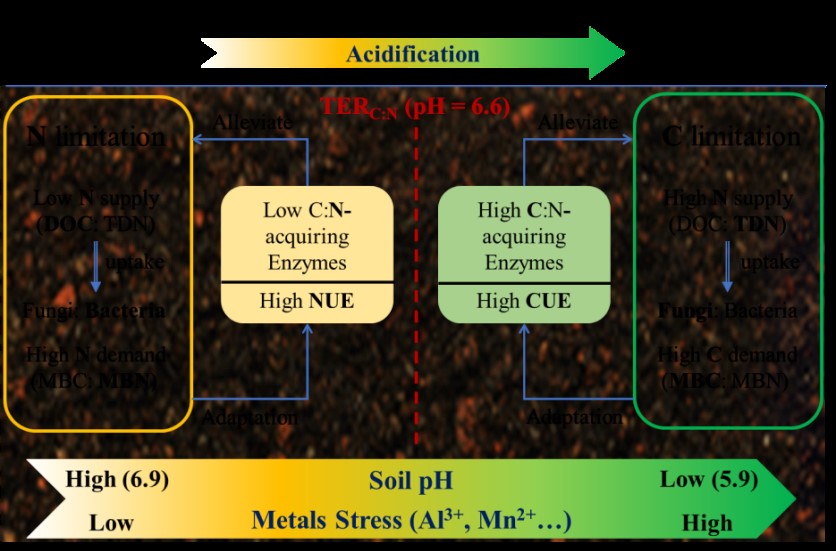 How Do Microbial Communities Adapt to Soil Acidification?Temperate grasslands in northern China have experienced extreme soil acidification in last 30 years due to increasing acid deposition and unsustainable management. Long-term soil acidification may lead to leaching of base cations, nutrient imbalances and metal stress for soil biomes.Aug 17, 2021
 -
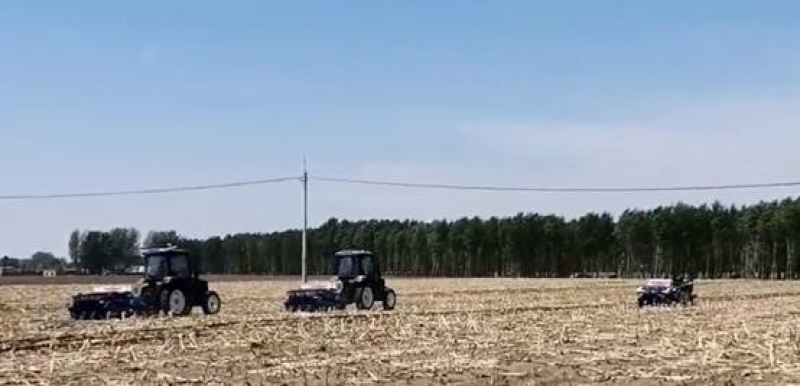 No-till Farming Should Accompany Crop Residue Mulching For Improving Nitrogen Use EfficiencyMaize stover have been widely proposed as essential renewable biofuels for clean energy. However, removing crop residue for bioenergy feedstocks may adversely offset the benefits of crop residue mulching, such as improve soil health, enhance crop productivity, and alleviate global climate change. Understanding crop yields and soil fertility in response to different levels of crop residue mulching in long-term no-till farming systems is pivotal for local agricultural management.Aug 17, 2021
 -
 Researchers Reveal the Responses of Grassland Functions to Drought EventIn our country, grasslands is one of important ecosystem and is an important ecological barrier, and green animal husbandry production base. The ecosystem plays an important role in maintaining national ecological security, food security and even global ecological balance.Aug 13, 2021
