

RESEARCH NEWS
-
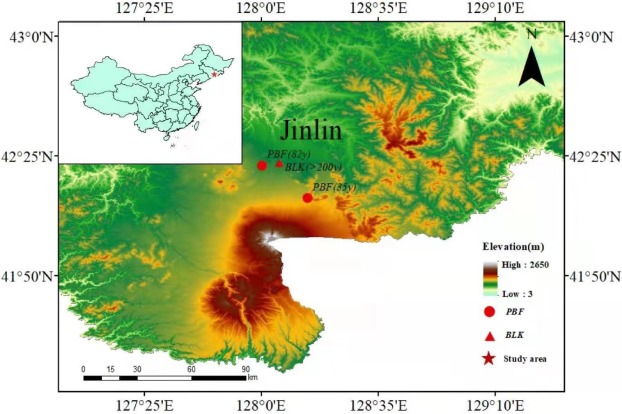 Microbial Sieving Effects on Vertical Differentiation of Nutrient Availability along Forest SuccessionAlong forest succession stages, soil nutrient status always presents vertical stratification along soil horizons. However, the mechanism underlying such soil depth-dependence is still a universally open question.Aug 13, 2021
 -
Sunlight Drives Leaf Mass Area Depending on Spectral CompositionPlant functional traits generally reflect the trade-off strategy between plant resource acquisition and investment under environmental changes. Plant leaves, as the main organ that converts inorganic carbon into organic carbon. Leaf mass area (the leaf mass per unit area, LMA), the core trait of "Leaf Economics Spectrum" theory, characterizes the morphological, physiological and biochemical functions of the leaves, as well as the functions and processes of the ecosystem. Therefore, a better understanding of the abiotic driving factors of LMA is the key to predict how terrestrial ecosystem functions respond to climate change.Aug 11, 2021
-
Priming Effect Caused by Root Litter Varies with Root OrderDespite the fact that plant litter contributes more to soil organic carbon storage, plant litter can influence soil organic crbon decomposition via the priming effect. While our current understanding of priming effect induced by plant litter is overwhelmingly from studies with leaf litter addition, we still know little about how root litter decomposes and subsequently the priming effect occurs until now.Jul 22, 2021
-
Long-term No-tillage with Crop Residue Application Could Improve Soil Nitrogen CyclingConventional tillage has been the common agricultural practices in the agroecosystem of northeastern China for a long period, with crop residues removed or burnt, which has caused serious soil degradation and threatened sustainable crop production. In recent years, no-tillage and crop residue application have been proposed as alternative forms of agriculture management in order to recover and improve soil quality. Nitrogen (N) cycling in cultivated land is highly affected by agricultural practices such as tillage and crop residue management.Jul 12, 2021
-
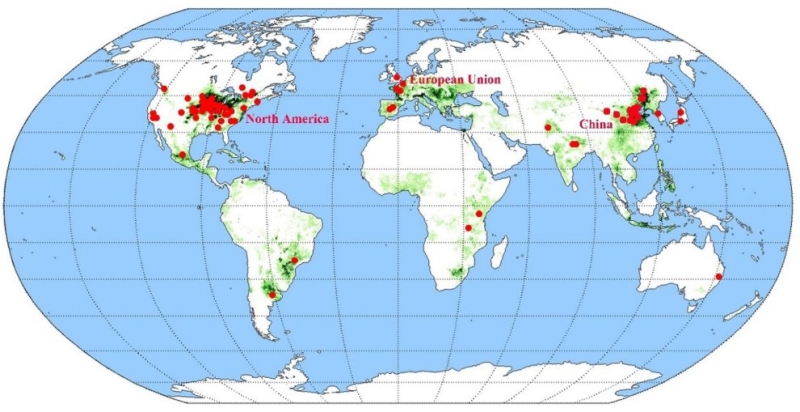 Scientists Conduct Meta-analysis of Literature Investigating Fate and Use Efficiency of Nitrogen Fertilizer in Maize Cropping SystemsThe application of nitrogen (N) fertilizer in farmland can significantly increase crop yields. But excessive application of N may decrease N utilization efficiency, increase N losses and cause environmental pollution. Quantifying the fate and use efficiency of N fertilizers is essential for nitrogen fertilizer management in farming systems. In order to achieve sustainable food production, researchers have developed different farming management regimes to increase crop yields and N use efficiency, and reduce environmental pollution caused by nitrogen losses. However, the fate and use efficiency of fertilizer N vary greatly across soil-climate regions and are affected by farming management regimes. Understanding the global and regional differences in N use efficiency and the factors controlling them can help us better manage N fertilizer application, improve resource utilization efficiency, and reduce environmental pollution caused by N losses.Jul 12, 2021
 -
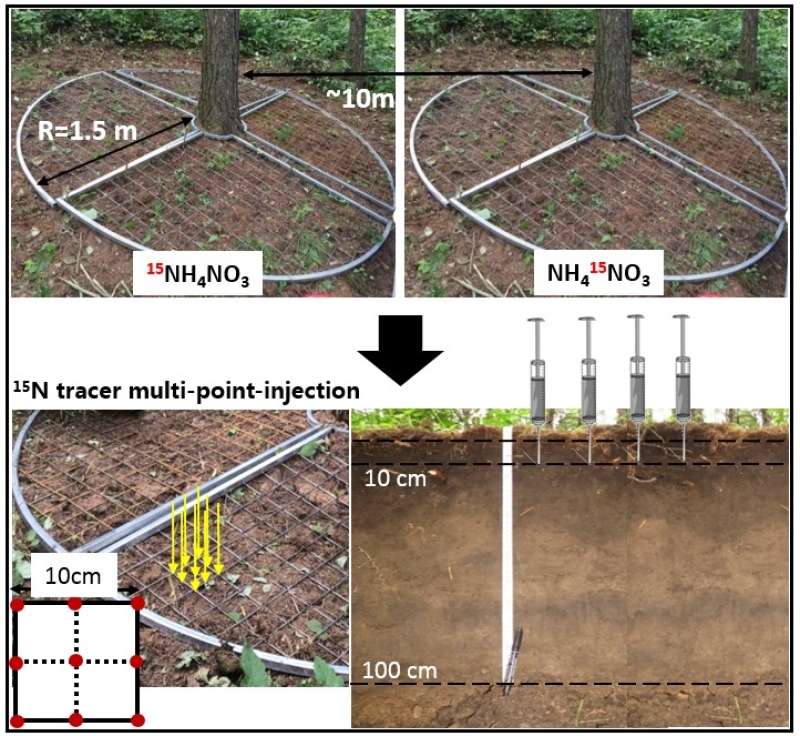 Researchers Develop and Improve the in Situ Paired 15N Labeling Technique to Study Mature Tree N Uptake PreferenceNitrogen (N) is often the limiting nutrient for plant photosynthesis and productivity in temperate forests. Variation in N uptake among different plant species is important to reduce competition and sustain biodiversity. N uptake preference refers to plants’ unequal uptake of different N forms in soils, i.e., the two dominant inorganic N forms of ammonium and nitrate. However currently we lack standard method to determine plant N uptake preference, especially for mature trees growing in the field.Jul 12, 2021
 -
Researches Reveal Sensitivity of Aboveground Biomass and Tree Species Composition of Boreal Forests in China to Climate ChangeThe climate change effects on boreal forests are more obvious than on other terrestrial ecosystems, and it is estimated that the temperature in boreal forests might rise at twice the rate of other ecosystems. It was shown that climate warming and changes in precipitation patterns can lead to changes in aboveground biomass and tree species composition of boreal forests. However, uncertainty in climate change prediction leads to large uncertainties in the prediction of biomass and tree species composition, which would be a challenge for forest managers to formulate measures to enhance the adaptation of forests to climate change impacts.May 31, 2021
-
Researchers Examine Uncertainty in Drought Assessment,Taking China as an ExampleIn view of this problem, assistant Prof. Ma Tianxiao, Prof. Liang Yu and their colleagues from the Landscape Process Group of the Institute of Applied Ecology, Chinese Academy of Sciences, used the data collected from 695 meteorological stations in China from 1970 to 2010 for drought assessment.May 31, 2021
-
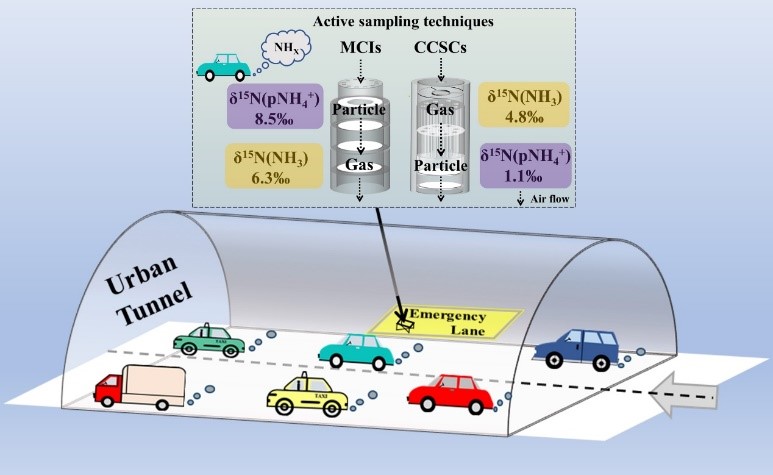 Characterizing the Nitrogen Isotope Composition of Ammonia from Vehicular Exhaust using Active Sampling TechniquesGlobal anthropogenic emissions of ammonia (NH3) has increased significantly in the recent years. In urban regions, emerging evidence suggests that vehicle emissions are an important source of NH3, which is an unintended consequence of the introduction of three-way catalytic converters (TWC) or selective catalytic reduction (SCR) equipped on gasoline/diesel vehicles to reduce NOx emission.May 24, 2021
 -
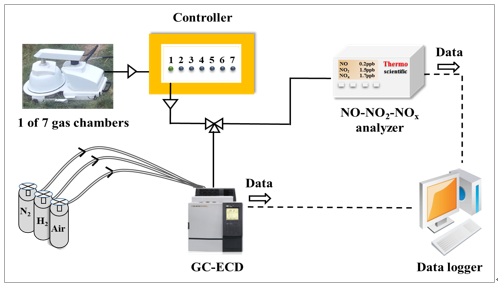 Intensified Droughts Will Affect N Gaseous Emissions in Rainfed AgricultureRainfed agriculture is one of the most common farming practices in Northeast China and the world, which is vulnerable to future climate change. Both NO and N2O are major contributors to atmospheric pollution and agriculture is a major source of both gaseous N. Seasonal variation of precipitation input can affect plant growth, soil microbial activities, and emissions of NO and N2O. However, the complexity of the mechanisms and the temporal and spatial variations relating to the emissions of NO and N2O in rainfed ecosystem are unclear.May 24, 2021
