

RESEARCH NEWS
-
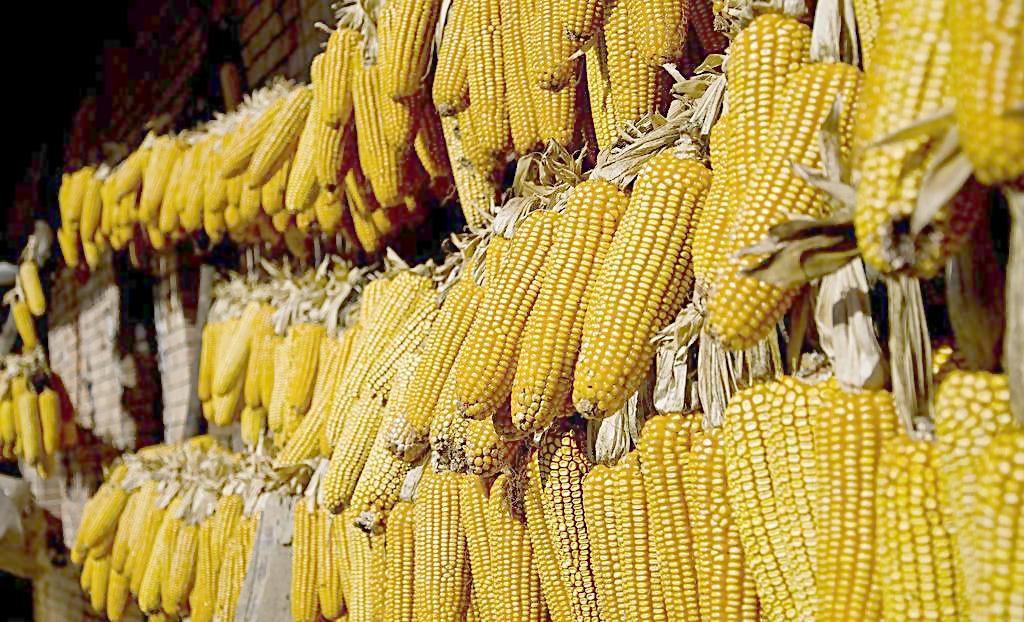 Scientists Reveal Effect of Maize Residue Retention on Nitrous Oxide EmissionIn conservation tillage systems, at least 30% of the soil surface remains covered by crop residue which generally contains significant amounts of nitrogen. Crop residues are important resources involved in nutrient cycling in agro-ecosystems.Dec 17, 2018
 -
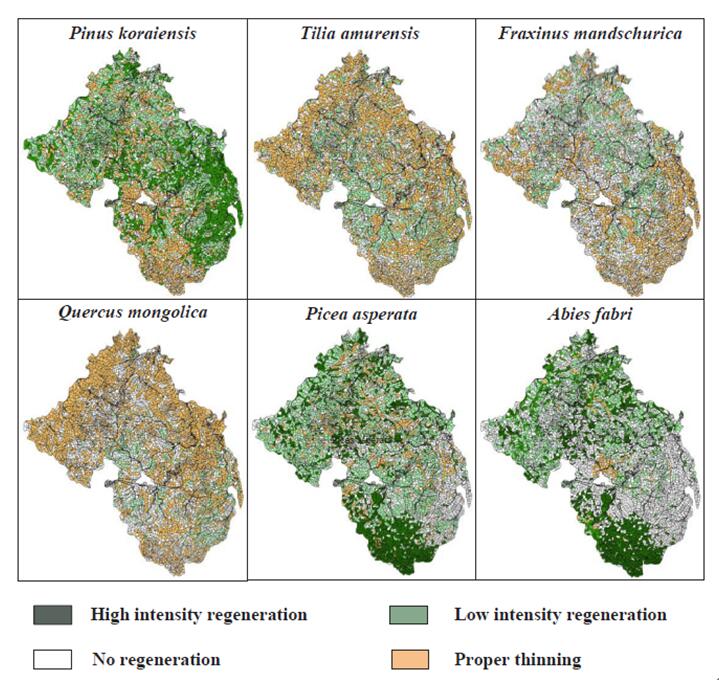 Scientists Developed an Integrated Multi-scale Approach for Restoring Degraded Forest EcosystemNatural forest degradation caused by human activities is one of the most serious problems that threaten human wellbeing and biodiversity conservation.Nov 29, 2018
 -
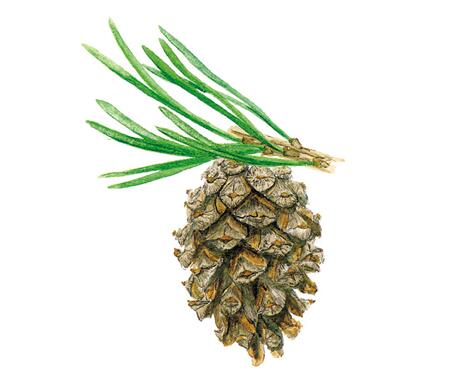 Inconsistent Reproductive Strategies of Pine Trees to Cope with Drought StressOver the past decades, drought events have been widely reported in almost all forest biomes around the world. Substantial evidence has suggested that trees might exhibit remarkable phenotypic plasticity in their eco-physiological traits in response to water deficit. However, current studies on trait plasticity are mainly concentrated on growth components, research on how reproductive traits respond to extreme drought is still lacking. It therefore limits our ability to synthetically predict how the ecophysiological properties of trees adapt to climate change.Nov 27, 2018
 -
 Researchers Reveal the Effects of Gap Size and Within-gap Position on Sprout Regeneration of Dominant Tree Species in the Secondary ForestsSecondary forests, derived from the natural regeneration of primary forests after destructive disturbances, have become major forest resources worldwide. Compared with primary forests, several problems have been observed in broadleaved secondary forests, including unoptimizable stand structure, unsuccessful natural regeneration of dominant tree species and unsustainability in both ecosystem services and productivity. Promoting natural regeneration of dominant tree species plays a critical role in the vegetation restoration of secondary forests.Nov 27, 2018
 -
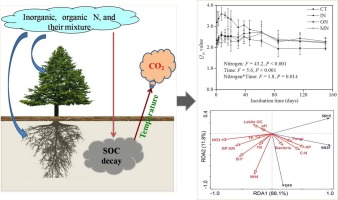 Scientists find inorganic N addition decreasing soil microbial respiration but increasing its averaged Q10 in a temperate forestSoil microbial respiration is a key process controlling the size of the soil organic C storage and C loss from terrestrial ecosystems to atmosphere. A small change in the rate of soil microbial respiration may have a large effect on the net C flux and climate dynamics because of the largest SOC stored in terrestrial soil systems. Therefore, understanding the response of soil microbial respiration and its temperature sensitivity (Q10) to atmospheric N deposition under global warming is important to improve the accuracy of predicting changes in global C cycles and its feedback to climate change.Oct 22, 2018
 -
 Do we really know the impact of nitrogen deposition: frequency makes a difference?Previous field studies simulating atmospheric nitrogen (N) deposition generally apply N once or twice (large and infrequent N pulses) during the growing season. However, atmospheric N deposition occurs in more frequent events of smaller doses of N to ecosystems.Oct 10, 2018
 -
 Researchers Find the Influence Factors of Nitrogen Deposition in a Temperate Meadow SteppeNitrogen (N) deposition is continuous increasing in terrestrial ecosystems, seriously impacts on ecosystem functioning, results in plant nutrient concentration and stoichiometric changes. Previous works have been well addressed the responses of nutrition traits at species-level to N deposition, while the community-level responses are still unknown for us.Sep 28, 2018
 -
 Contrasting Dynamics and Trait Controls in First-order Root Compared to Leaf Litter DecompositionDecomposition of plant roots and associated fungal mutualists is a dominant process in ecosystem carbon cycles, yet is woefully understudied compared to decomposition of leaf litter, particularly for the finest order roots that have the highest turnover. Much less is known about how roots decompose within the soil matrix, and whether the litter traits that influence leaf litter similarly influence root decomposition, or how well coordinated these influential traits are across leaves and roots.Sep 26, 2018
 -
 Effects of N Fertilization and Maize Straw Amendment on the Transformation and Fate of Fertilizer N in Black Soil of Northeast ChinaDr. LU Caiyan, a researcher of Institute of Applied Ecology, Chinese Academy of Sciences, evaluated the effects of N inputs rate and maize straw amendment on the transformation and fate of fertilizer N by 15N-labeled outdoor pot experiment.Sep 17, 2018
 -
 Oil Reservoir Indigenous Isolate Pseudomonas Stutzeri XP1 and Its Exopolysaccharide Product Well Enhanced Oil RecoveryAlthough chemical-flooding technologies well improve oil recovery, the subsequent produced fluid treatment is difficult, and the used chemicals may pollute the environment. Microbial enhanced oil recovery (MEOR) technology utilizes microbial growth and metabolism in oil reservoirs or their metabolites to improve oil recovery. Because of its simple implementation, cost-effective and environment-friendly, MEOR is expected to become one promising technology to enhance oil recovery in the future.Sep 14, 2018
