


Workshop Reviews Development Priorities for Forestry Research Center
The Institute of Applied Ecology of the Chinese Academy of Sciences convened a workshop on March 31 to discuss the future development of its Forest Ecology and Forestry Engineering Research Center. More than 50 participants, including institute leadership, academic committee members, and research team representatives, attended the meeting, which was chaired by HAO Guangyou, head of the center.
The workshop focused on aligning research priorities with national strategies related to carbon neutrality, ecological security, and sustainable forestry development. Participants reviewed the center’s role in supporting major initiatives such as enhancing forest carbon sinks, strengthening ecological shelterbelts in northern China, and advancing key ecological restoration programs.
During the meeting, representatives from several innovation groups presented their strategic plans, covering areas such as development and maintenance of ecological shelterbelts, plant biodiversity conservation and sustainable use, climate change and forest stability, forest biodiversity and ecosystem functioning, and belowground ecosystem processes and productivity. The presentations outlined research positioning, priority directions, recent progress, team development, platform construction, and plans for the upcoming Five-Year period, while also identifying challenges in talent recruitment, project acquisition, and the application of research outcomes.
Experts attending the workshop reviewed the plans and offered recommendations. They noted that the center should further strengthen its focus on national priorities and shift research planning toward addressing pressing strategic needs. Suggestions included improving technical guidance for forestry practices such as forest management, forest-based understory industries, and ecosystem conservation, as well as improving the practical value of outputs, including patents and policy advisory reports. The experts also called for better functional distinction among research teams, improved cross-group coordination, and stronger interdisciplinary integration, particularly in areas such as ecology, earth sciences, and biogeochemistry.
Administrative departments provided additional perspectives based on their respective functions, addressing issues such as strategic planning, integration of Party-building and scientific research, major project development, talent recruitment, financial management, and resource coordination.
In concluding remarks, Academician ZHU Jiaojun reviewed the original goals behind establishing the innovation groups and affirmed the center’s role in advancing forest science. He emphasized the need to align future development with the institute’s upcoming Five-Year Plan and to sharpen research priorities in response to national demands. He also called for more clearly defined roles within research teams and offered guidance on addressing existing challenges.
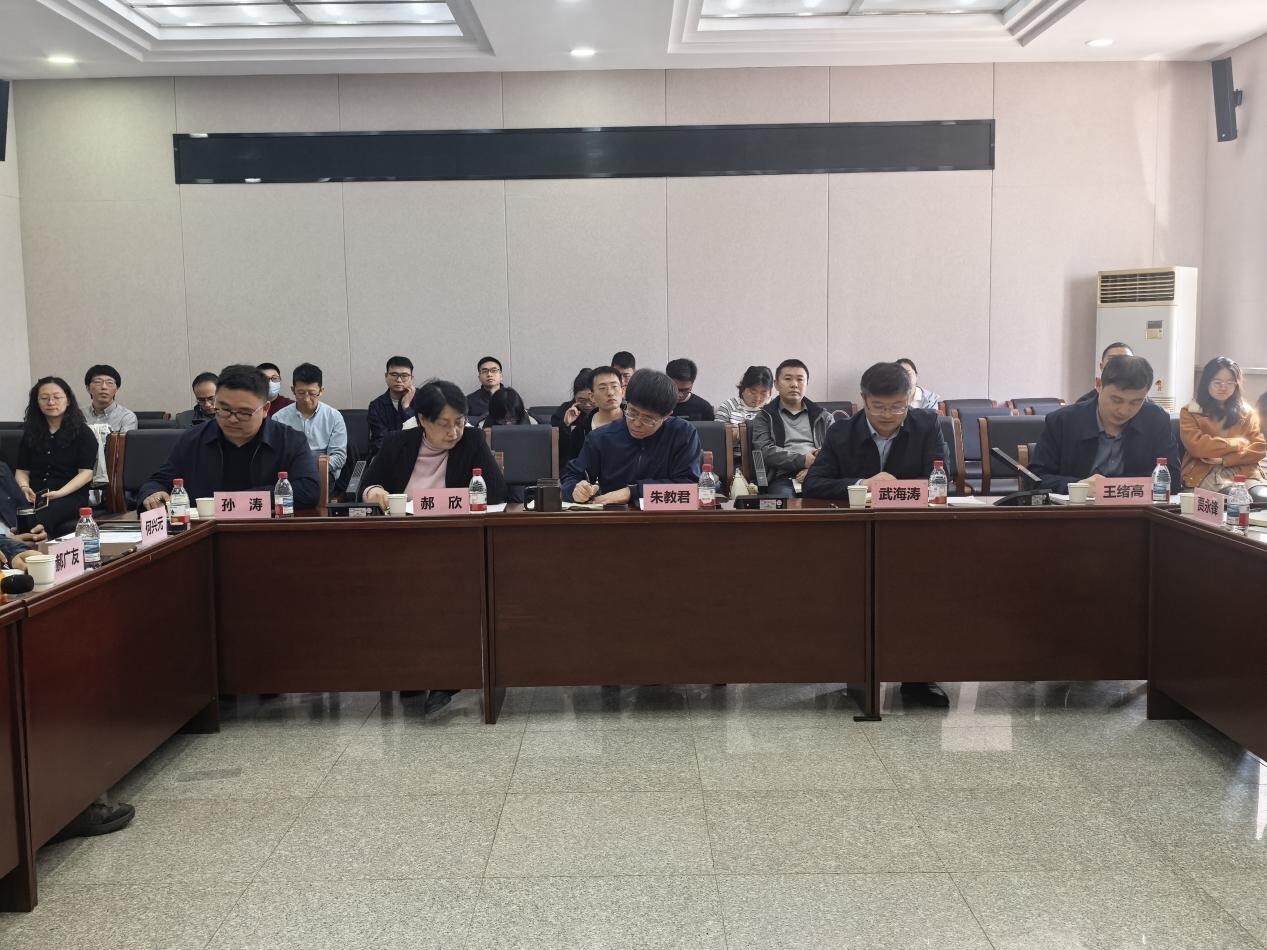
Participants listen to presentations during the workshop
