


Meeting Maps Development of Science Support Platforms for Next Five-Year Period
The discussion focused on strengthening foundational capacities of key support platforms, including field observation stations, arboreta, research specimen archives, information centers, and public technical service facilities. These platforms provide essential infrastructure for long-term ecological monitoring, data management, and experimental analysis.
Senior experts and administrative officials attending the meeting included Academician YU Guirui, Academician ZHANG Jiabao, SONG Shuguang of the Liaoning Provincial Department of Science and Technology, and XU Bo of the National Science and Technology Infrastructure Platform Center. They noted that field observation stations, as part of the national science infrastructure system, are increasingly expected to support major scientific missions and provide data for policy-making. Participants highlighted the need to advance the operational capacity of these platforms, improve integrated data management, and enhance their role in serving national science and technology goals.
In opening remarks, Academician ZHU Jiaojun stressed that field stations have long been a cornerstone of the institute’s research system. He called for using the new planning period as an opportunity to upgrade the overall platform network and strengthen its contribution to scientific innovation. Other speakers also encouraged stronger alignment with national and regional platform systems and greater coordination in setting standards for observation and data sharing.
A report presented at the meeting reviewed progress made during the current Five-Year period and outlined development plans for the next phase. It detailed the strategic positioning, historical development, and current layout of field stations, as well as the roles of the institute’s information and public technical service centers. The report also proposed future priorities, including improving data management and promoting the application of artificial intelligence in scientific research.
Principal Investigators of 12 support platforms presented their development plans, summarizing achievements, identifying challenges, and proposing measures for improvement. Their reports addressed issues such as platform positioning, key research tasks, talent development, and allocation of resources, with an emphasis on responding to national needs and enhancing operational efficiency of platforms.
During the consultation session, attending academicians and experts provided recommendations on optimizing the overall layout and strengthening strategic planning. They called for building high-level flagship observation stations with both national and international influence and for promoting interdisciplinary integration across ecology, earth sciences, and related fields. Participants also stressed the importance of clarifying the roles of information and technical service platforms and developing distinctive capabilities to better support scientific research.
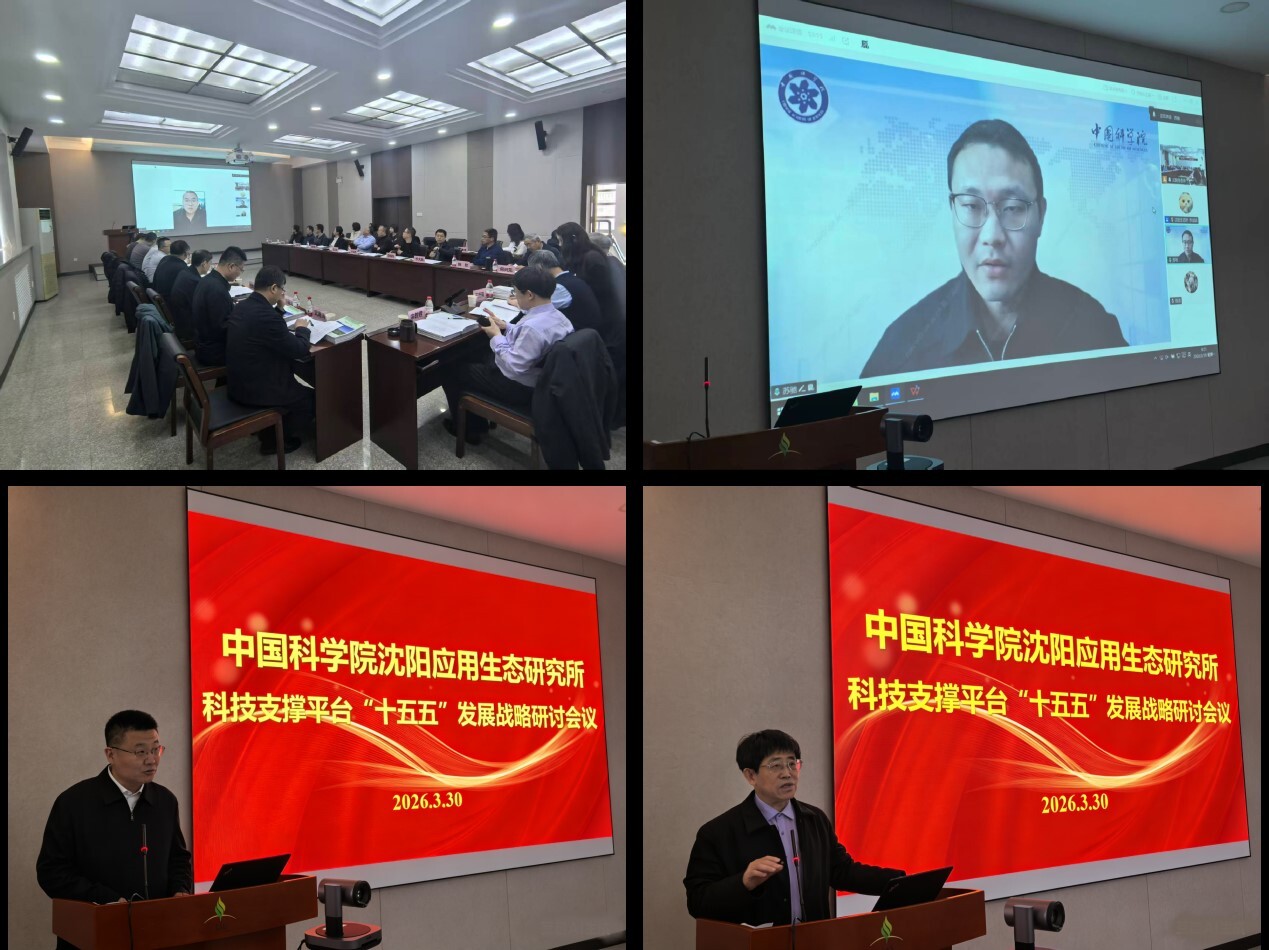
Senior experts and administrative officials deliver remarks at the meeting
