


Study Questions Reliability of Leaf N:P Ratio as Indicator of Nutrient Limitation in Grasslands
A research team at the Institute of Applied Ecology, Chinese Academy of Sciences, has found that the widely used leaf nitrogen-to-phosphorus (N:P) ratio may not reliably indicate nutrient limitation in grassland ecosystems.
The study was published in New Phytologist.
Nitrogen and phosphorus are key elements that regulate plant growth in terrestrial ecosystems. Human activities have increased the input of reactive nutrients, particularly nitrogen, at rates much higher than phosphorus. This imbalance can alter soil nutrient availability and plant nutrient composition, potentially shifting ecosystems from nitrogen limitation to phosphorus limitation or co-limitation. In ecological research, the leaf N:P ratio has often been used as a diagnostic indicator, with threshold values suggesting nitrogen limitation when N:P is below 14 and phosphorus limitation when it exceeds 16. However, empirical evidence supporting this framework has remained limited.
Using a nitrogen and phosphorus addition platform at the Erguna Forest–Grassland Ecotone Research Station, the study led by Drs. LÜ Xiaotao and LIANG Xiaosa quantified changes in aboveground net primary productivity, or ANPP, and leaf N:P ratios over a period of seven to nine years. ANPP refers to the net accumulation of plant biomass above the soil surface and is a commonly used measure of ecosystem productivity.
The researchers found that nitrogen addition alone increased ANPP by about 120 percent and raised the community-level leaf N:P ratio from 9.3 to 17.2. Based on conventional thresholds, this shift would suggest the onset of phosphorus limitation. However, when phosphorus was added to nitrogen-enriched plots, ANPP did not increase significantly, even though the leaf N:P ratio declined. The researchers concluded that nitrogen enrichment did not actually induce phosphorus limitation in plant growth, challenging the reliability of the N:P ratio as a stand-alone indicator.
Further analysis focused on the allocation of phosphorus within plant leaves. The researchers reported that nitrogen addition reduced total leaf phosphorus content, but its effects varied across different phosphorus fractions. Concentrations of metabolic phosphorus and lipid phosphorus, which are often associated with storage and structural functions, declined, while nucleic acid phosphorus, which is closely linked to protein synthesis and cell division, increased. This shift in phosphorus allocation allowed plants to maintain growth despite lower total phosphorus levels and higher N:P ratios. The findings suggest that plants can adjust internal nutrient allocation strategies to cope with imbalanced nutrient supply.
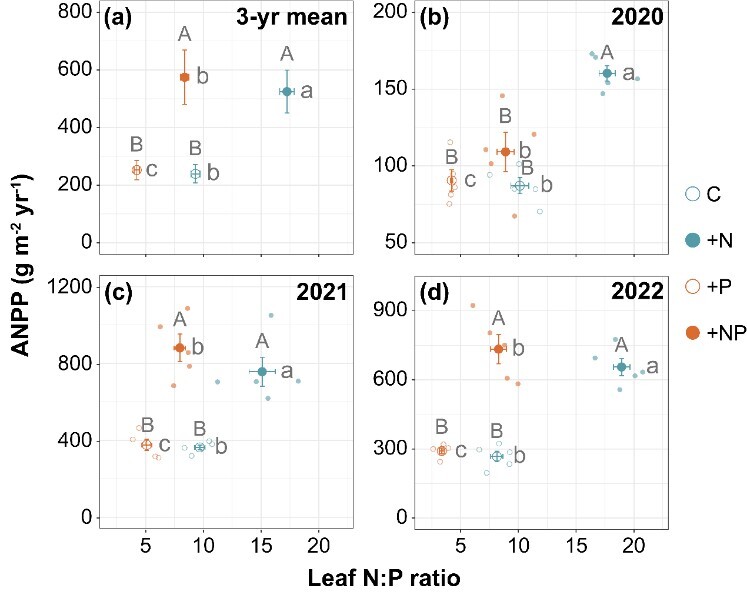
Figure 1. Responses of aboveground net primary productivity and leaf N:P ratio of plant communities to nitrogen and phosphorus addition.
