News
IAE Organizes Workshop to Boost Field Station Capabilities and Integrated Monitoring
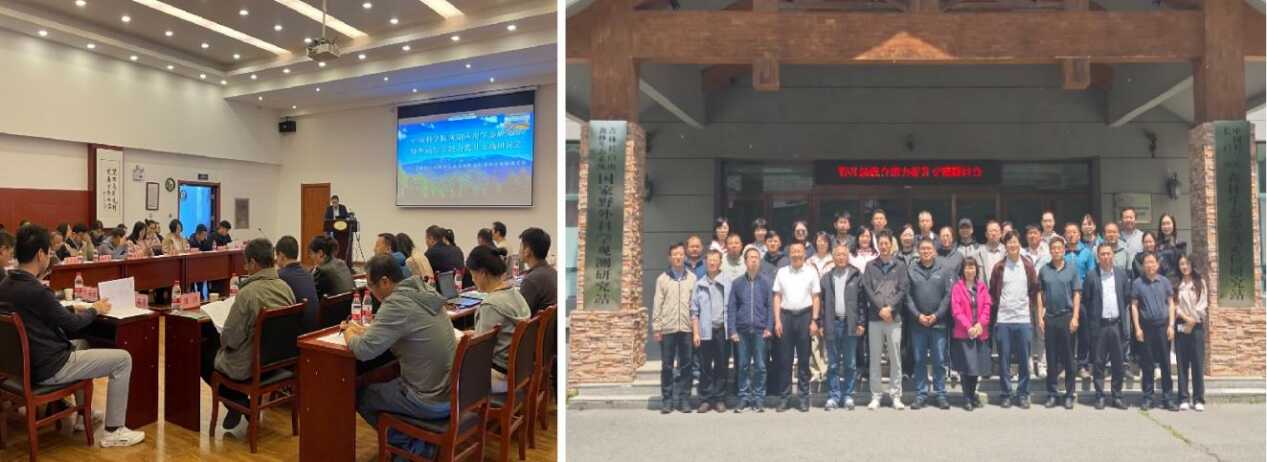
From June 11 to 13, the Institute of Applied Ecology (IAE) of the Chinese Academy of Sciences organized a workshop on comprehensive capacity building for field stations at the Changbai Mountain Forest Ecosystem National Field Scientific Observation and Research Station in Jilin Province. The workshop brought together officials and experts from national science and technology infrastructure platforms, leading research stations across China, and representatives from the institute’s management and technical support teams.
The workshop opened with remarks from XU Bo, deputy division director of the National Science and Technology Infrastructure Center. He noted that field stations constitute a key component of the national scientific innovation system and called for forward-looking planning to further enhance their role in scientific discovery and operational support. XU also encouraged the development of joint observational initiatives to carry out coordinated monitoring on specific ecological themes or across broader regions, with a view to securing major research funding and improving networked observation capacity.
SUN Tao, deputy director of the Institute of Applied Ecology, expressed appreciation for the participation of experts and emphasized the foundational role of field stations in supporting high-quality institutional development. He acknowledged achievements made during the 14th Five-Year Plan period, while also pointing to gaps in management capacity, observational strength, and coordinated networking. He called for clearer strategic thinking, taking proactive action, and improving institutional mechanisms to enhance overall station capacity.
During the academic exchange session, YANG Ping, a researcher with the Science and Technology Infrastructure Bureau of the Chinese Academy of Sciences, delivered a keynote speech titled “How to Be an Effective Field Station Director: Lessons from CERN Stations.” Station directors from several key monitoring sites, including the Dinghushan Forest Station, Qianyanzhou Red Soil Hilly Critical Zone Station, and Gongga Mountain Forest Station, also presented reports. They shared progress in scientific research, platform construction, long-term monitoring plots, flagship research achievements, and future development strategies, while exchanging experience on station-specific challenges.
In subsequent discussions, participants focused on strengthening integrated observational networks and improving collaborative research mechanisms. Experts proposed leveraging the distribution of field stations in Northeast China to build coordinated monitoring systems aligned with major ecosystem types, including forests, grasslands, farmland, wetlands, and desert landscapes. They also emphasized the importance of supporting young researchers in maintaining strong field-based scientific traditions amid a broader shift toward data-driven ecology.
Another key topic was enhancing collaboration with local governments to secure policy and financial support for station operations and research programs. Participants agreed that stronger institutional linkages would be essential for sustaining long-term monitoring efforts.
In his concluding remarks, SUN Tao stressed that managing field stations requires long-term dedicated effort and perseverance. “Each stage of development brings different priorities, and stations must continuously refine their positioning to better serve national scientific needs,” he said. He further highlighted the importance of building platforms capable of undertaking major scientific missions and advancing integrated monitoring efforts, particularly across northern China’s station network. SUN also suggested that long-term datasets accumulated by field stations could be organized into thematic data papers for publication in academic journals, while encouraging coordinated efforts to consolidate major scientific outcomes and pursue major science and technology awards.
Following the meeting, participants visited the Changbai Mountain station’s comprehensive observation field, forest canopy observation tower, eddy covariance flux system measuring carbon dioxide and water vapor exchange, and a 24-hectare temperate secondary forest plot dominated by poplar and birch species.
The workshop, centered on enhancing field station capabilities and advancing integrated observational research, provided a platform for communication and collaboration among China’s ecological observation network.