

RESEARCH PLATFORMS
Qingyuan Forest Station
Introduction
Qingyuan Forest was founded in 2002 by Institute of Applied Ecology, Chinese Academy of Sciences (CAS). It is located in the montane region of eastern Liaoning Province (the northern foot of Longgang Mountain), which belongs to the Changbai Mountains. Qingyuan Forest became a CAS field research station in 2012 and joined the Chinese Ecosystem Research Network (CERN) in 2014. In 2020 it was taken as a national field research station.
1. Research Direction
We mainly follow the typical temperate secondary forest ecosystem (including secondary forests and mosaic plantations) of Northeast China and focus on four topics:
(1) Structure, function, and regulation of forest ecosystems;
(2) Effects of natural or human disturbances on the succession of temperate secondary forest ecosystems;
(3) Mechanisms of forest ecosystem carbon sink formation and the techniques for improving carbon sink;
(4) Precise improvement of forest quality and efficient use of forest resources.
2. Scientific Contribution
Supported by projects such as National Basic Research Program of China (973 Program), National Key Research and Development Program of China, National Major Science and Technology Program, National Natural Science Foundation of China (NSFC) for Distinguished/Excellent Young Scholars, Major Program/Key Program of NSFC, Hundred-Talent Program of CAS, and CAS Key Research Program of Frontier Science, Qingyuan Forest established a new parameter system to quantify multi-dimensional forest structure, innovated a “win-win pattern of forest ecological conservation and forest resource utilization”, and improved the systems of National Natural Forest Protection Project and “Grain for Green” Program, which made a great contribution to practicing the theory of “lucid waters and lush mountains are invaluable assets”. Qingyuan Forest also initiated a management system incorporating theory and technology suitable for the construction of protective forests, and created an integratedtheory and method of “space-air-tower-ground” for assessing large-scale forestry ecological projects, which provided accurate solutions and decision-making basis for their construction and management. All these findings have contributed to the development of forest ecology and forestry.
3. Achievement and Award
Over 500 peer-reviewed articles have been published, of which more than 300 papers were published in SCI journals. More than thirty authorized patents have been obtained. Ten consulting reports have been adopted by General Office of the Central Committee or by General Office of the State Council of People’s Republic of China. Over ten scientific and technological achievement awards have been received, including Second Prize of National Science and Technology Progress Award (twice), Science and Technology for Development Award of CAS, First Prize of Liaoning Natural Science Award, and First Prize of Liaoning Science and Technology Progress Award, etc. More than 60 personal honor awards have been achieved by the academic leader of Qingyuan Forest, such as IUFRO Scientific Achievement Award.
4. Team
There are 31 researchers and 11 monitoring and support personnel in Qingyuan Forest. A young and middle-aged research team has been established, which consists of the Chief Scientist of 973 Program, the Chief Scientist of National Key Research and Development Program, Chief Scientist of Major Program of NSFC, winners of NSFC for Distinguished/Excellent Young Scholars, winners of Hundred-Talent Program of CAS, guest professors, and outstanding members of Youth Innovation Promotion Association of CAS. Nearly one hundred postgraduates and postdoctoral students have been trained, and more than 40 students are now working in the station.
5. Foundation
Qingyuan Forest has been fully equipped with research and living infrastructures, including a laboratory building, a comprehensive building, an apartment building, and a dining hall, etc. There are forests of 1450 ha for research, experiment, and monitoring, of which 1350 ha are located in the main research area and 100 ha are in the auxiliary area. Permanent forest plots of 360 ha have been established. Furthermore, there are a series of large and important research platforms such as research sample plots for secondary forest ecosystem, Ker Towers, network of forest hydrological monitoring stations, a multi-functional data center, and field warming platforms. Weather stations and permanent monitoring sites have been established to provide basic data of water, soil, weather, and biology of major forest types. There are other supporting platforms such as Sino-USA Joint Laboratory of Silviculture and Ecology and Ker Joint Lab (CAS-CSI Joint Laboratory of Research and Development for Monitoring Forest Fluxes of Trace Gases and Isotope Elements).
6. Aims
Taking root in the Northeast, orienting to China and aiming at the international scope, Qingyuan Forest aims to develop an integrated and world-class field experiment platform. Qingyuan Forest mainly studies forest ecosystem, as well as takes landscape of “mountain-river-forest-farmland-lake-grass-sand” into consideration. Specifically, Qingyuan Forest will be a platform for long-term and systematic observation of resources, environment, and ecological function elements; a platform for forest ecology/silviculture and science of protective forest research, high-level talent training, and science education; and a platform for research, demonstration, and promotion of sustainable development technology in forestry. Moreover, it will conduct domestic and international academic exchange and cooperation and perform network information demonstration of Big Data. Eventually, a comprehensive research platform leading forest ecology, silviculture, and science of protective forest will be achieved. The research findings in Qingyuan Forest will provide scientific and technical supports for sustainably managing forest ecosystems, ensuring national ecological security, food security, managing major forestry ecological projects, and promoting the construction of Ecological Civilization in China (e.g., practicing the “Two Mountains Theory”, and achieving “carbon neutrality”).
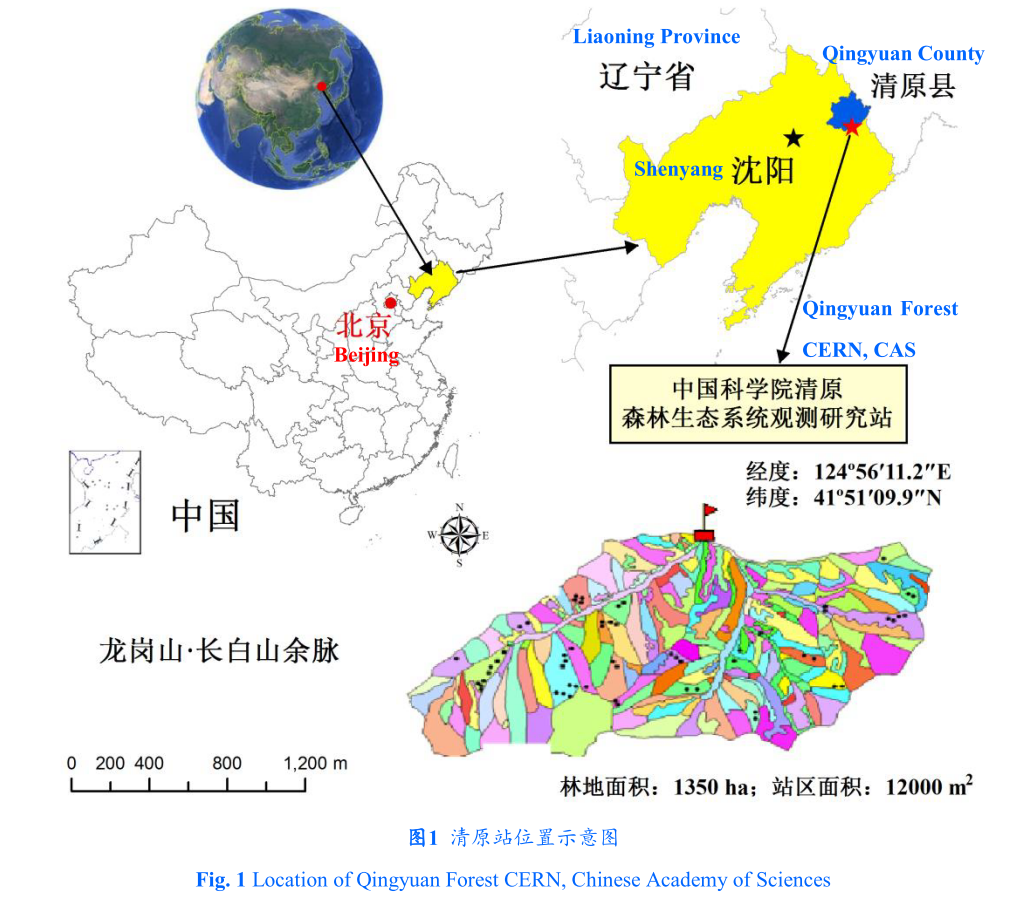
Figure 1 The location of Qingyuan Forest
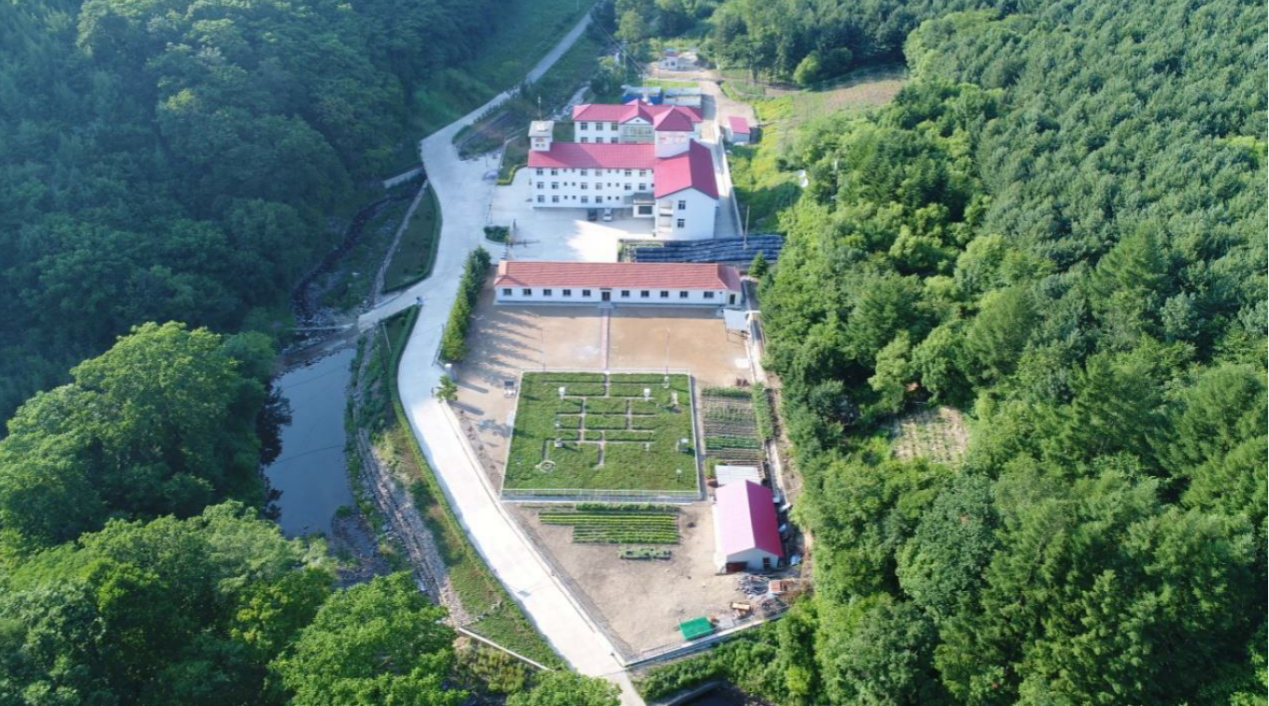
Figure 2 The full view of Qingyuan Forest
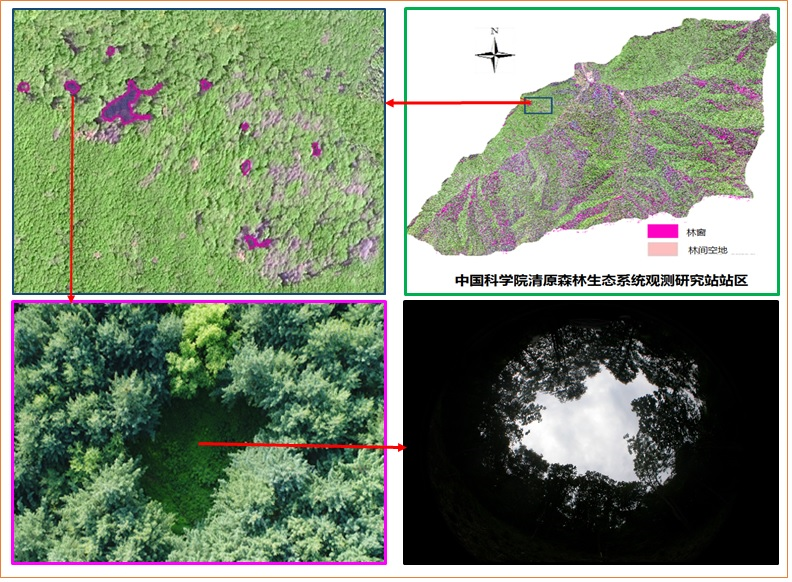
Figure 3 The multi-scale distribution map of forest gaps in Qingyuan Forest
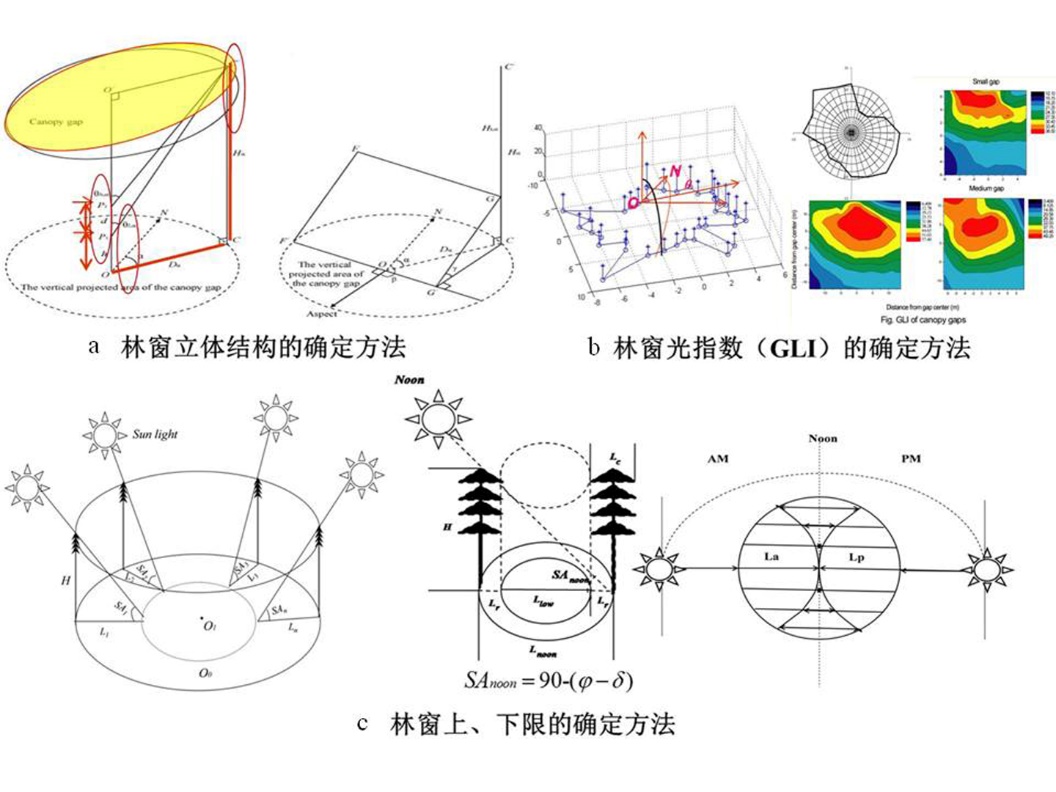
Figure 4 The schematic diagrams for the determination methods of three-dimensional gap structure (A), gap light index (GLI) (B), and upper and lower limits of gap size (C)
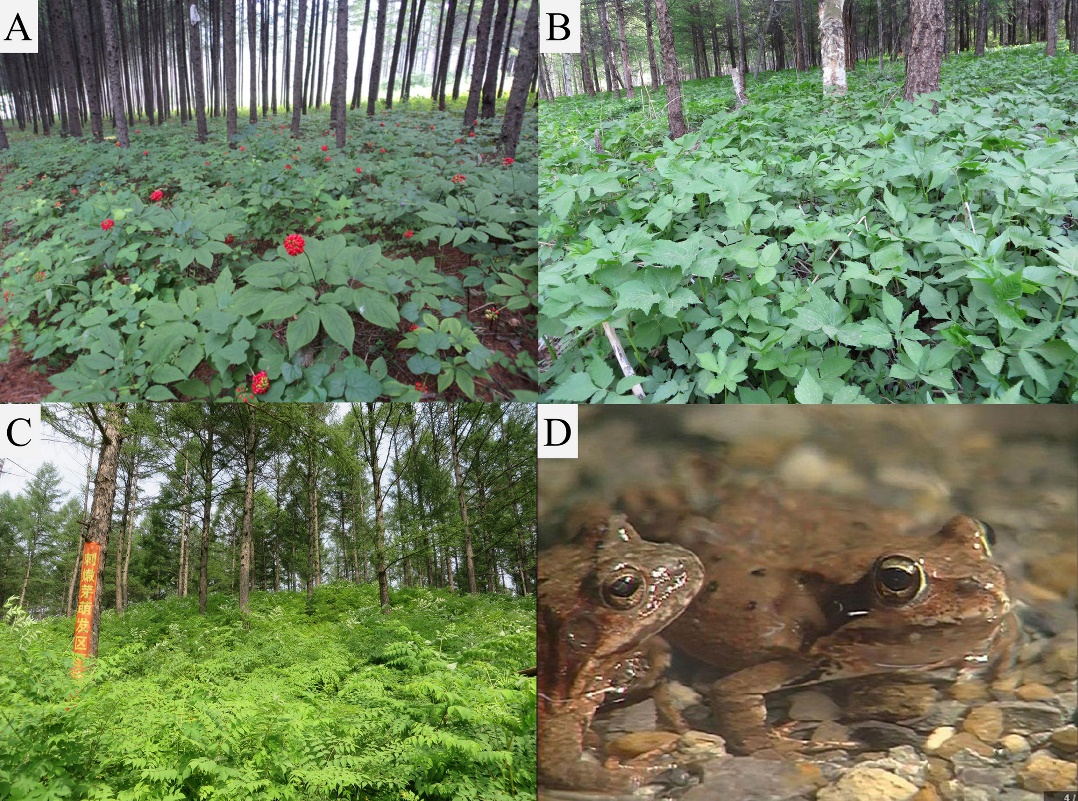
Figure 5 The demonstration sites for non-wood resources under the forest canopy, including Panax ginseng (A), Spuriopimpinella brachycarpa (B), Aralia mandshrica (C), and Rana chensinensis (D)
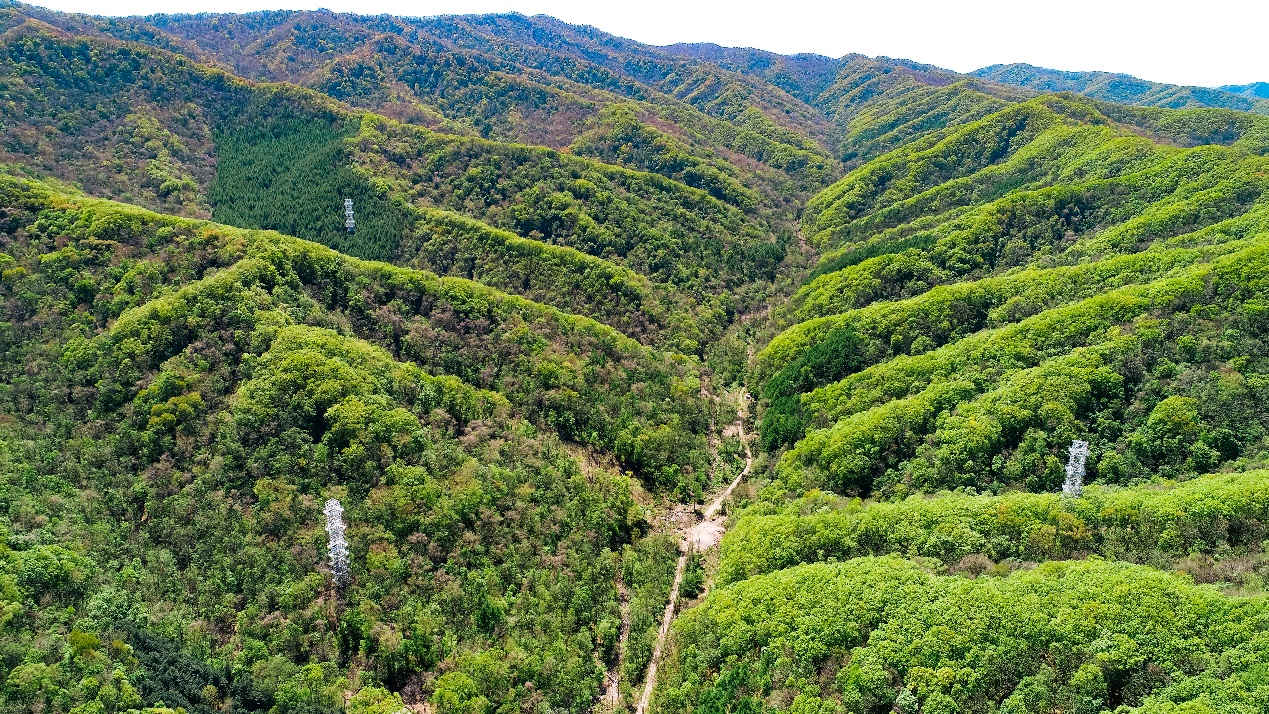
Figure 6 The Ker Towers in the secondary forest ecosystem

Figure 7 The field warming platform in the secondary forest ecosystem
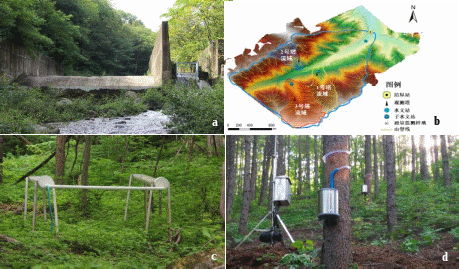
Figure 8 The network of hydrological monitoring stations in the secondary forest ecosystem
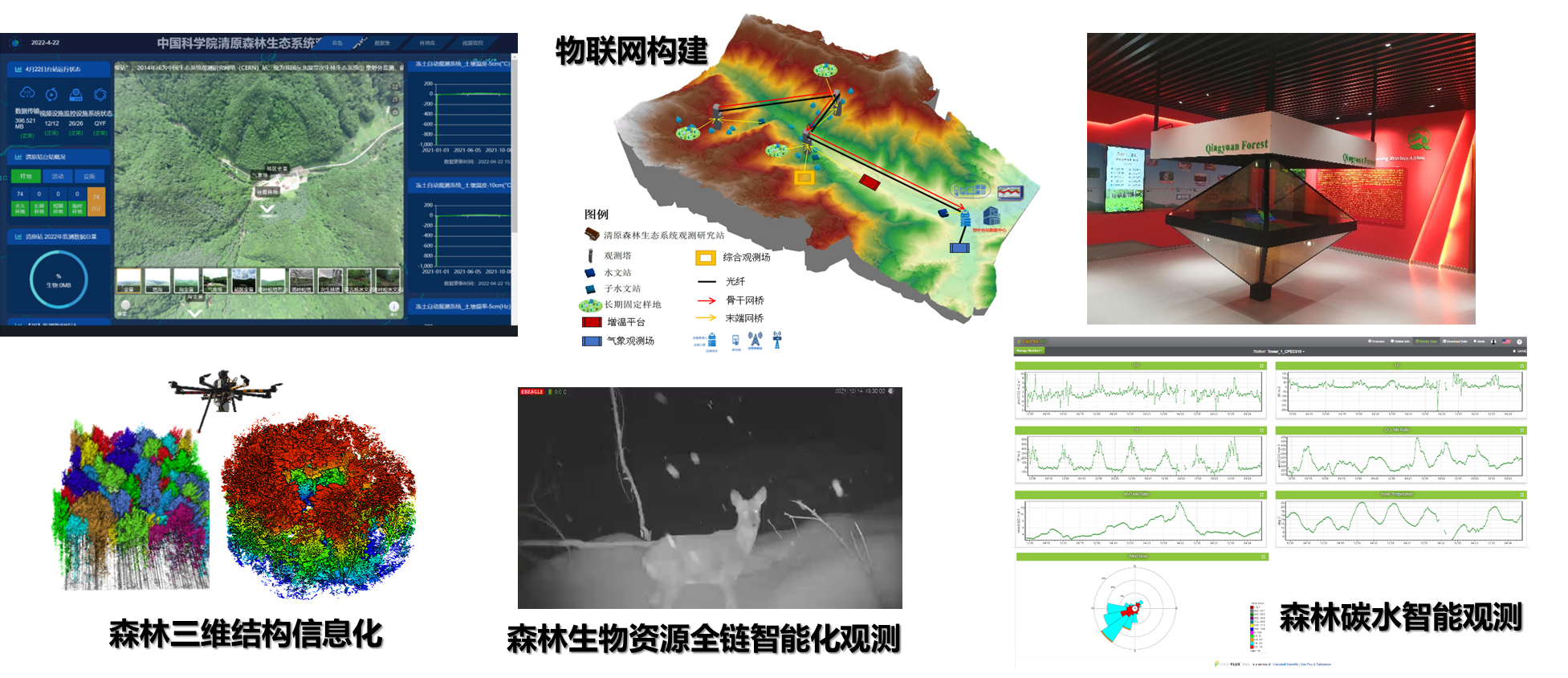
Figure 9 Informatization platform of Qingyuan Forest
