

RESEARCH NEWS
Vitamin C Production Byproduct Found to Improve Maize Yield through Soil and Microbial Processes
The vitamin C industry may offer an unexpected resource for sustainable agriculture, according to a new study by researchers from the Institute of Applied Ecology of the Chinese Academy of Sciences. The team found that a fermentation byproduct generated during vitamin C production can improve soil biological activity and crop performance, increasing maize grain yield by 8.26 to 13.46 percent under field conditions.
The findings were published in the Journal of Environmental Management.
China is the world's leading producer and supplier of vitamin C, with an annual production capacity of around 200,000 metric tons. The manufacturing process generates approximately 40,000 tons of residue after evaporation (RAE) each year. RAE is the concentrated liquid remaining after industrial fermentation and evaporation. Although it contains abundant organic matter and low-molecular-weight organic acids that could benefit soils, improper disposal may create environmental problems because of its high acidity and high organic load. Developing practical ways to recycle this industrial byproduct could therefore help reduce waste while supporting greener agricultural production.
In a three-year field experiment conducted in the semiarid farmlands of Fuxin, Liaoning Province, Dr. CHENG Haotian, together with Dr. SUN Hao, Researcher XU Hui and their colleagues found that applying RAE substantially improved soil nutrient availability. Levels of dissolved organic carbon, which serves as a readily available energy source for soil microorganisms, increased significantly, as did the availability of mineral nitrogen in the forms of ammonium and nitrate that plants can readily absorb.
The researchers also found that RAE stimulated soil biological activity. Both of soil microbial biomass and respiration were increased, while the activities of enzymes involved in carbon, nitrogen and phosphorus cycling were enhanced. At the same time, the abundance of microbial functional genes involved in these nutrient cycles increased, indicating that the soil microbial community had a greater capacity to decompose organic matter and release more nutrients from soil for plant growth.
These improvements in the soil environment were accompanied by measurable changes in maize physiology. Plants treated with RAE showed higher photosynthetic rates and greater chlorophyll contents, allowing them to capture and convert solar energy into biomass more efficiently. The treatment also promoted the translocation of accumulated dry matter from stems and leaves into developing kernels and improved the grain-filling process, a critical stage during which starch and other storage compounds are deposited in the grain. As a result, maize grain yields increased by 8.26 to 13.46 percent, and yield measurements collected from 2023 through 2025 confirmed that the effect was consistent across multiple growing seasons.
According to the researchers, the findings point to a pathway through which the industrial byproduct promotes crop production. RAE enhances the supply of available soil nutrients, strengthens microbial functions involved in nutrient cycling, improves key physiological processes in maize, and ultimately supports higher grain yields.
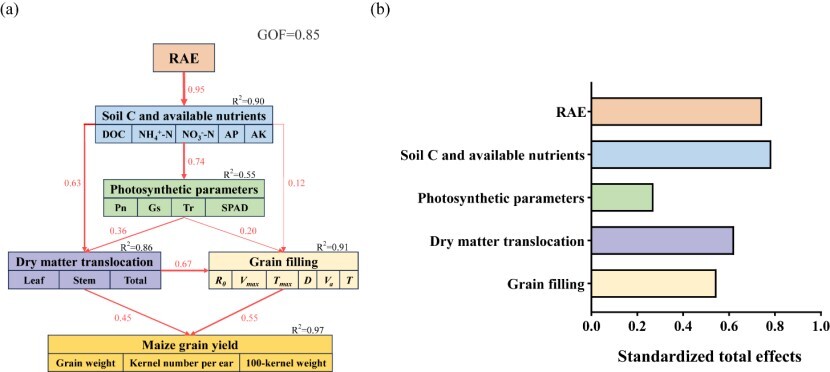
Figure 1. Proposed pathways through which residue after evaporation (RAE) regulates soil nutrient availability and maize grain formation (Image by XU Hui).
