

RESEARCH NEWS
-
How a Superantigen Mutant Can Trigger Immune Response in Ovarian Cancer CellsSuperantigens are molecules that can stimulate a strong immune response by activating a large number of cytotoxic T cells, which are white blood cells that can eliminate tumor cells. One example of a superantigen is staphylococcal enterotoxin C2 (SEC2), which is produced by a type of bacteria. Scientists have constructed a mutant of SEC2, called ST-4, that can activate cytotoxic T cells more effectively.Aug 11, 2023
-
How Soil Microfauna Diversity and Community Assembly Change Across Latitude in CroplandsThe researchers found that the beta diversity of plant-parasitic nematodes, fungivorous nematodes and bacterivorous nematodes increased with geographical separation, and that the local community assembly processes, species replacement in particular, played a dominant role in shaping soil microfauna communities, which reflected that “some of the species had their preferences and strong agricultural habitat specialization,” the researchers explained. In addition, the researchers found that climatic and soil factors directly influenced soil microflora and plant-parasitic nematodes, and indirectly influenced community composition of bacterivorous nematodes, fungivorous nematodes and predatory-omnivorous nematodes. The researchers also found a close trophic cascade relationship between soil microflora and soil nematodes, and the complexity of this biological network was mediated by latitudinal gradient.Aug 11, 2023
-
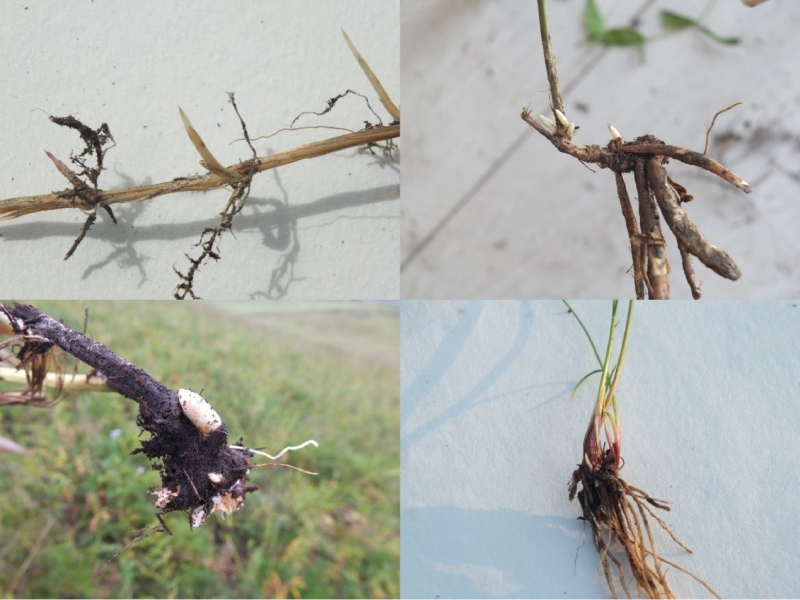 Bud Bank Confers Post-drought Recovery Across GrasslandsTo address this knowledge gap, a research team from the Institute of Applied Ecology of the Chinese Academy of Sciences conducted a six-year drought manipulation experiment in four arid and semiarid grasslands that consisted of a four-year drought, followed by a two years recovery. They assessed the resistance and resilience of ANPP and community bud bank traits to drought and recovery.Jul 12, 2023
 -
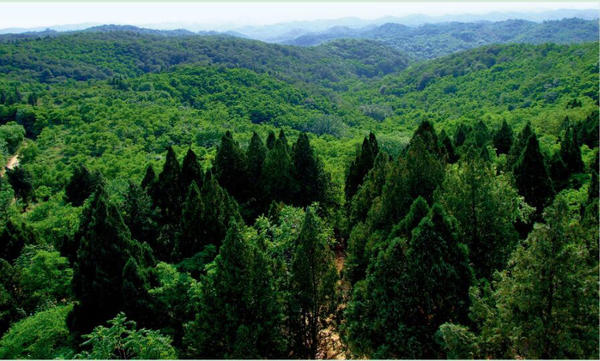 A New Study Quantifies Temperature Sensitivity of Soil Gaseous Nitrogen Loss in Forest EcosystemsThe research team developed a novel technique using 15N tracer to quantify the production rates of N2O and N2 derived from denitrification in forest soils across 18 sites in China, covering a wide range of climatic gradients. The results revealed an exponential increase in denitrification N2O and N2 production rates with rising temperature, exhibiting a geographical pattern. Importantly, the study found consistent temperature sensitivity for N2O and N2 release across different climatic zones, with Q10 values of 2.1 ± 0.5 and 2.6 ± 0.6, respectively.Jul 03, 2023
 -
Much Lower Nitrogen Saturation Threshold Found for Total Net Primary Productivity Than That for Above-ground NPPDr. LV Xiaotao and Dr. YANG Guojiao, the research team members of the Ecostoichiometry Research Team of the Institute of Applied Ecology (IAE) of the Chinese Academy of Sciences (CAS), together with researchers from Lancaster University and the Institute of Botany of CAS, have investigated the response of aboveground and underground components of net primary productivity to nitrogen inputs for years at Erguna (Inner Mongolia) Forest-Steppe Ecotone Research Station.Jun 06, 2023
-
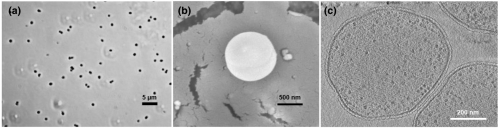 The Discovery, Identification, and Naming of New Species of Organohalide-respiring BacteriaThe research team at the Institute of Applied Ecology, Chinese Academy of Sciences, focusing on "Microbial Ecology of Contaminated Environments," collaborated with the University of Tennessee, USA. Their joint efforts led to the discovery and enrichment of a novel Dehalogenimonas strain capable of utilizing various chlorinated alkenes, including vinyl chloride, for growth. This strain was isolated from grape pomace compost samples. Through advanced techniques such as metagenomics and metaproteomics, the gene responsible for vinyl chloride reductive dehalogenase was identified, leading to the naming of the strain as 'Candidatus Dehalogenimonas etheniformans' strain GP. Previous studies had only identified certain strains of Dehalococcoides capable of respiratory metabolism for dechlorination of vinyl chloride, a known human carcinogen. The discovery of the GP strain expands the microbial resources available for remediating environments contaminated with organochlorine compounds.May 23, 2023
 -
Regenerated Woody Plant Community Matters to Soil Microbial Diversity and Litter Decomposition in Chinese Fir PlantationsThe Plantation Ecology Research Team of the Institute of Applied Ecology (IAE) of the Chinese Academy of Sciences, led by Prof. WANG Silong, recently explored the relationship between plant community attributes (biomass and diversity) and the α- and β-diversity of soil microbial community, as well as the relationship between plant community attributes and the decomposition of leaf litter and fine roots in a large-scale, permanent plot of Chinese fir (Cunninghamia lanceolata) plantation in Hunan Province.May 22, 2023
-
Nitrogen Addition and Experimental Drought Simplified Arthropod Network in Temperate GrasslandBiodiversity is threatened by global changes. The efforts to unravel the mechanisms underlying the influence of global changes are mainly focused on species diversity, but neglect the network of their interactions, which is essential for maintenance of biodiversity and ecosystem functions. Moreover, multiple global change factors are typically examined separately, rather than in concert which is more realistic in nature.May 12, 2023
-
Soil Organisms Serve as Both Drivers of Soil Carbon Cycling and Sources of Soil Organic CarbonTwo research teams of the Institute of Applied Ecology (IAE) of the Chinese Academy of Sciences (CAS), the Soil Ecology Research Team and the Ecosystem Microbiology Research Team, recently conducted an indoor microcosm experiment. The leading researchers Dr. KOU Xinchang, Dr. ZHANG Xiaoke and Dr. LI Qi, together with their colleagues, used carbon-stable isotope tracing technique to study the biological transformation pathways of exogenous organic carbon and the energy flow process within the soil food web to elucidate the roles of soil food webs on soil carbon capture, or carbon sequestration.May 11, 2023
-
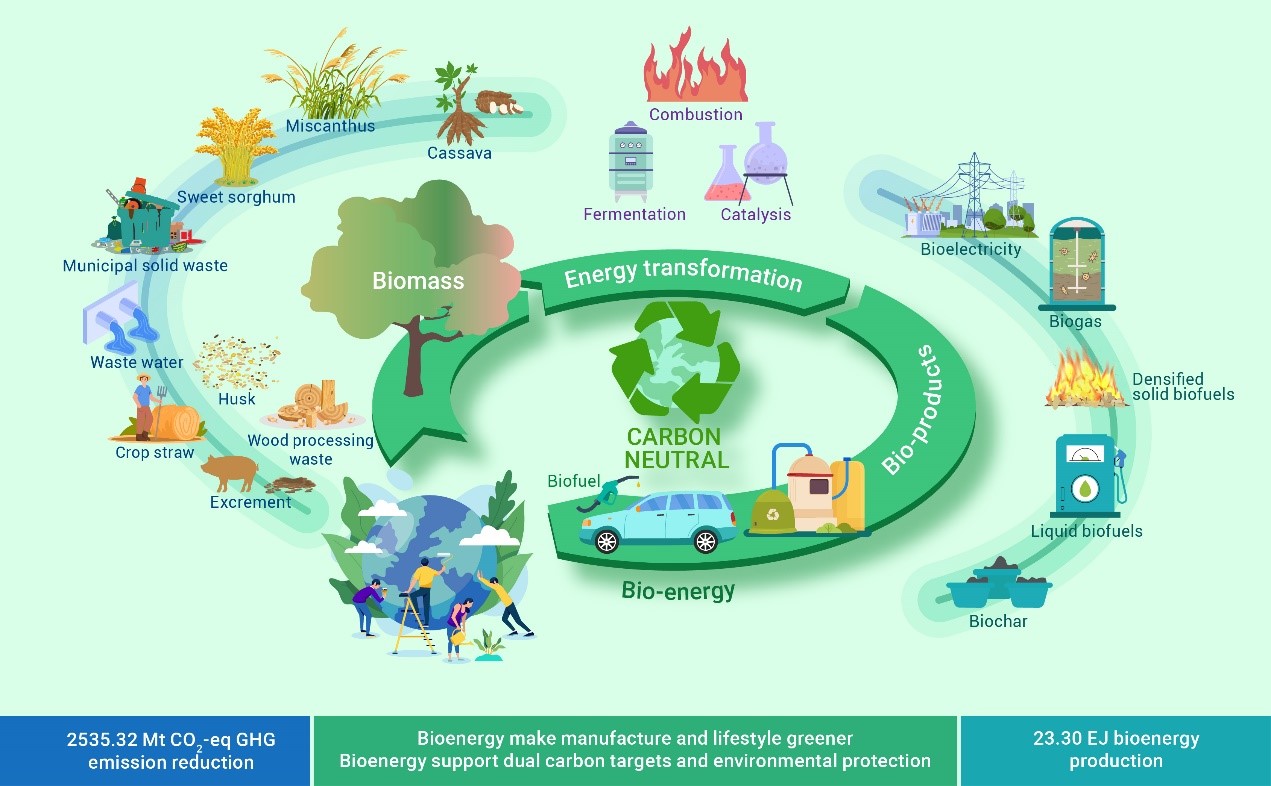 Energy Conservation and Carbon Reduction Potential for Multi-Source and Multi- Approach Biomass Energy ConversionA joint research team consisting by Professor XI Fengming group from Institute of Applied Ecology of the Chinese Academy of Sciences (CAS), Professor FU Jingying group from Institute of Geographic Sciences and Natural Resources Research of CAS, and Professor WANG Feng group from Dalian Institute of Chemistry and Physics of CAS constructed a comprehensive bioenergy accounting model with a multi-dimensional analysis that combines spatial analysis, life-cycle analysis, and multi-path analysis. Adopting the accounting model, they assessed the China’s bioenergy production and carbon emission reduction potentials.Apr 28, 2023
