

RESEARCH NEWS
Intercropping with Reduced Nitrogen Input Enhances Soil Micro-Food Web Complexity and Stability
Researchers from the Institute of Applied Ecology (IAE) of the Chinese Academy of Sciences (CAS) have found that combining crop intercropping with moderate nitrogen fertilizer reduction can improve the complexity and stability of soil micro-food webs, providing new insights into sustainable agricultural management.
The study was published in Geoderma.
Soil micro-food web is composed of soil microorganisms and microfauna,which regulate nutrient cycling and ecosystem functions. However, intensive agricultural practices, including long-term monoculture and excessive nitrogen fertilizer application, can disturb soil microbial and nematode communities and their multitrophic associations. Intercropping, a crop diversification practice involving the simultaneous cultivation of multiple crops, can alter resource distribution and ecological interactions within soils, while nitrogen management can further influence the structure and functioning of soil biological communities. How these combined practices affect the complexity and stability of soil micro-food webs has remained unclear.
Researchers including graduate student GAO Lixiang, doctoral student YANG Minghao, researcher ZHANG Xiaoke, and researcher LIANG Wenju of IAE, CAS, conducted field experiments at the Changtu Modern Agricultural Experimental Station in Liaoning Province. The researchers compared maize monocropping with maize/peanut intercropping under different nitrogen application levels, including no nitrogen input, moderately reduced nitrogen input, and conventional nitrogen input. Soil microbial communities and microfauna were analyzed to evaluate changes in patterns of associations among soil organisms within the micro-food web, a network formed by organisms at multiple trophic levels, including soil bacteria, fungi, and nematodes.
The researchers found that intercropping increased the complexity of soil micro-food webs under reduced or no nitrogen conditions. However, excessive nitrogen input reduced network stability, particularly under monoculture conditions. The combination of intercropping and moderate nitrogen reduction promoted the formation of soil food webs with both greater complexity and stability. These changes were accompanied by shifts in soil microbial and nematode communities, with intercropping helping preserve multitrophic diversity under reduced nitrogen input.
The researchers also found that conventional nitrogen application under monocropping lowered soil pH and decreased fungal and multitrophic β diversity, while increasing the relative abundance of pathogenic fungi.
Further quantitative ecological analyses indicated that species association patterns within the soil micro-food web were important drivers of network complexity. The researchers found that intercropping reshaped associations among bacteria, fungi and nematodes, strengthening both within-trophic and across-trophic connections. These changes were associated with greater network complexity and stability.
The study suggests that crop diversification and optimized nitrogen management can reshape multitrophic associations and enhance soil micro-food web complexity and stability.
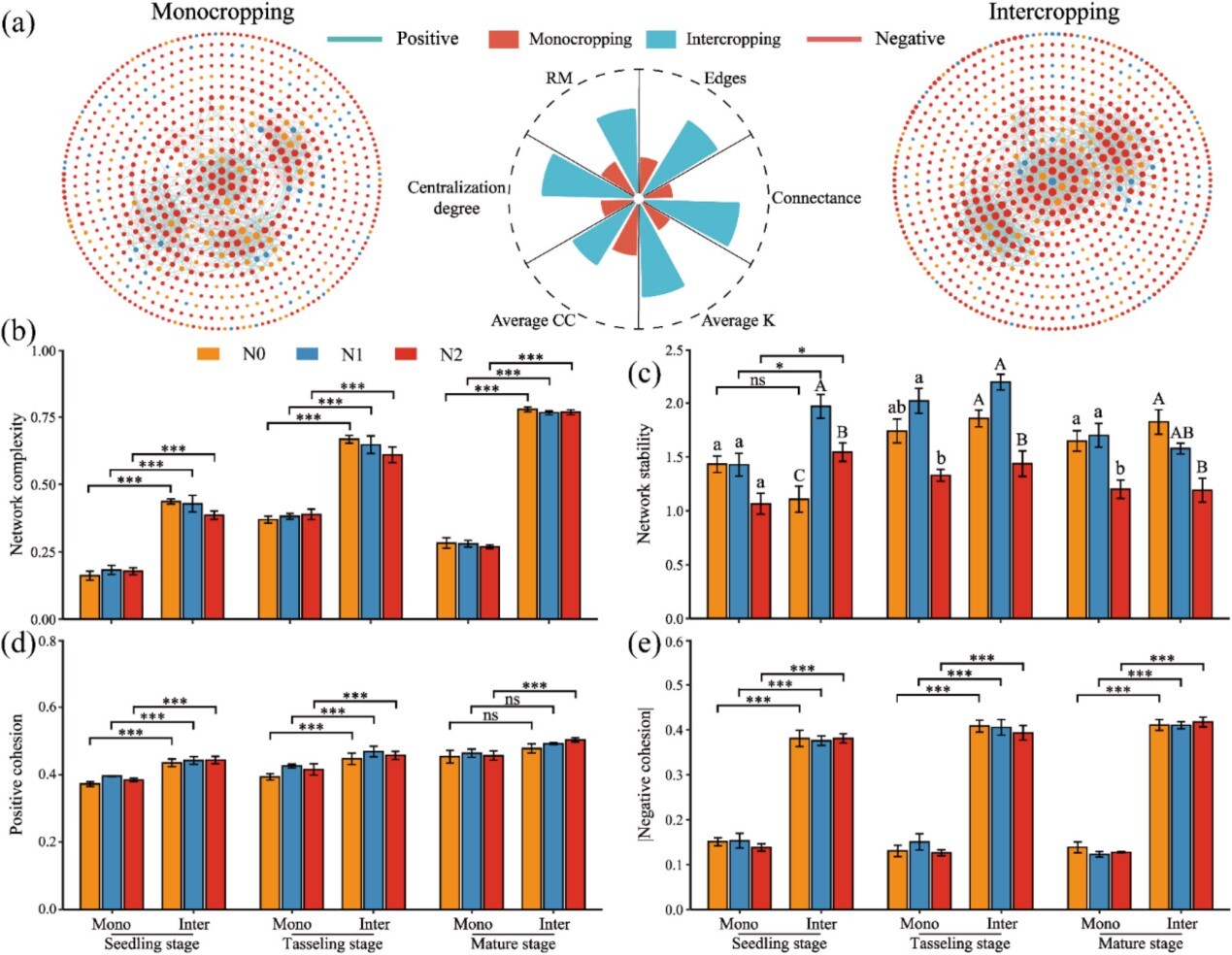
Figure 1. Changes in soil micro-food web network complexity and stability under maize monocropping and maize-peanut intercropping with different nitrogen inputs (Image by ZHANG Xiaoke).
