

RESEARCH NEWS
-
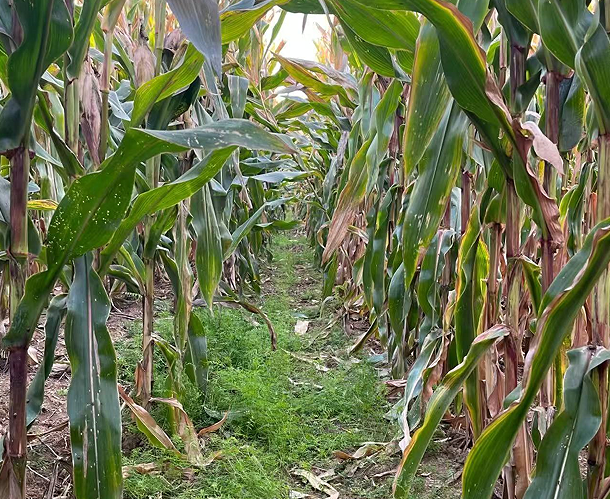 Microbial Substrate Utilization Strategies Shape the Decomposition of Soil Organic Carbon Components Under Conservation TillageResearchers from the Institute of Applied Ecology (IAE) of the Chinese Academy of Sciences (CAS) have revealed how microbial strategies for using carbon substrates regulate the decomposition of different soil organic carbon components under long-term conservation tillage.Oct 13, 2026
-
 Intercropping with Reduced Nitrogen Input Enhances Soil Micro-Food Web Complexity and StabilityResearchers from the Institute of Applied Ecology (IAE) of the Chinese Academy of Sciences (CAS) have found that combining crop intercropping with moderate nitrogen fertilizer reduction can improve the complexity and stability of soil micro-food webs, providing new insights into sustainable agricultural management.Oct 13, 2026
-
 Mycorrhizal Composition and Species Dominance Affect Forest Plant Diversity Across Northeastern ChinaResearchers from the Institute of Applied Ecology (IAE) of the Chinese Academy of Sciences (CAS) have found that mycorrhizal composition and species dominance jointly shape patterns of forest plant species richness and abundance.Sep 29, 2026
-
 Forest recovery after disturbance drives China’s forest carbon sink, study findsForest recovery on land affected by fires, harvest and other disturbances has been the main contributor to China’s forest carbon sink over the past three decades, according to a study by researchers from the Institute of Applied Ecology (IAE) of the Chinese Academy of Sciences (CAS) and their domestic and international collaborators.Sep 02, 2026
-
Soil Acidity Influences Carbon Removal Efficiency of Enhanced Rock Weathering, CAS Study FindsA study by researchers at the Institute of Applied Ecology (IAE) of the Chinese Academy of Sciences (CAS) has found that soil acidity plays a critical role in determining the effectiveness of enhanced rock weathering (ERW) and the accuracy of carbon removal estimates.Aug 24, 2026
-
 Researchers Reveal How Herbicide Residues Disrupt Soybean Soil Ecosystems and How a Herbicide-degrading Bacterium can Restore Nitrogen CyclingResearchers at the Chinese Academy of Sciences’ Institute of Applied Ecology (IAE) have clarified how the herbicide chlorimuron-ethyl affects nitrogen cycling in soybean rhizosphere soils and demonstrated that a chlorimuron-ethyl-degrading bacterial strain, Chenggangzhangella methanolivorans CHL1, can help restore ecological stability in contaminated soils.Jul 29, 2026
-
 CAS Team Urges Scientific Caution in Interpreting Carbon Sink Claims in the Three-North Program in the Taklamakan DesertA research team led by Academician ZHU Jiaojun from the Institute of Applied Ecology, Chinese Academy of Sciences, has published a commentary in the Proceedings of the National Academy of Sciences (PNAS), responding to a recent article on carbon sink estimation in the Taklamakan Desert. The commentary provides a scientific assessment of claims that large-scale afforestation under China’s Three-North Protective Forest Program has transformed the hyper-arid region into a measurable terrestrial carbon sink, urging more rigorous interpretation of carbon accounting in hyper-arid desert ecosystems.Jun 29, 2026
-
 Drought Reshapes Grassland Vegetation Through Ecological and Social Pathways, ReviewA new review led by Institute of Applied Ecology of the Chinese Academy of Sciences highlights how drought will impact grassland vegetation and pastoral livelihoods through interconnected ecological and social processes.Jun 29, 2026
-
Forest Biodiversity Study Recognized Among China’s Top Ecological Science Advances in 2025A study led by Senior Researcher WANG Xugao and his team at the Institute of Applied Ecology, Chinese Academy of Sciences, has been selected as one of the “Top 10 S&T Advances in Eco-Environmental Protection of China 2025.”Jun 23, 2026
-
 A Four-Decade Record Reveals Asymmetric Seasonal Shifts in Vegetation Growth Across China's Forest-Grassland EcotoneTemperature emerged as the dominant climatic driver, influencing vegetation greenness across more than half of the study area and exerting the strongest control over growth rates across roughly 40% of the region.Jun 18, 2026
