

RESEARCH NEWS
Microbial Substrate Utilization Strategies Shape the Decomposition of Soil Organic Carbon Components Under Conservation Tillage
Researchers from the Institute of Applied Ecology (IAE) of the Chinese Academy of Sciences (CAS) have revealed how microbial strategies for using carbon substrates regulate the decomposition of different soil organic carbon components under long-term conservation tillage.
The study was published in the Journal of Integrative Agriculture.
Soil organic carbon plays a critical role in maintaining soil functions and enhancing the carbon storage capacity of agricultural ecosystems. Soil organic matter consists of diverse components derived from plants, such as lignin and neutral sugars (originally derived from cellulose and hemicellulose in vascular plant debris), and microbial-derived components, mainly microbial necromass accumulated in soil through microbial growth and turnover. These components differ in their chemical structures and persistence in soil. However, it remained unclear how microorganisms adjust their carbon utilization strategy under different levels of carbon availability and how this affects the decomposition and stabilization of soil carbon.
Researchers including doctoral student WANG Wanqi, associate researcher ZHU Xuefeng, and researcher HE Hongbo of IAE, CAS, together with collaborators, collected soils from long-term conservation tillage plots in Northeast China and conducted controlled laboratory incubation experiments to evaluate how microbial substrate use influenced carbon decomposition.
The researchers found that plant-derived carbon components contributed more to soil organic carbon decomposition than microbial-derived components. Microbial necromass, by contrast, was more resistant to decomposition and helped carbon stabilization, particularly in soils with higher carbon availability.
In soils with higher carbon availability, microorganisms tended to use easily decomposable carbohydrates before decomposing more chemically resistant compounds such as lignin. This sequential decomposition pattern reflects an energy-efficient strategy in which microbes preferentially consume readily available carbon sources. In contrast, under carbon-limited conditions,microorganisms adopted a different strategy by simultaneously utilizing easily decomposable carbon and more resistant compounds, allowing them to obtain energy while facilitating the decomposition of lignin and other chemically resistant compounds.
The researchers also found that changes in microbial communities contributed to these contrasting decomposition patterns. In carbon-rich soils, bacteria were more involved during the early stage of decomposition, while fungi became increasingly important in later stages associated with lignin decomposition. In carbon-limited soils, actinomycetes, a group of bacteria known for their ability to utilize diverse organic compounds, contributed to the decomposition of both carbohydrate-based and lignin-related carbon sources.
The researchers noted that soil carbon stability is not determined only by the chemical resistance of carbon compounds. Instead, it is also shaped by how microorganisms adapt their resource-use strategies to long-term conservation tillage practices and differences in soil carbon availability.
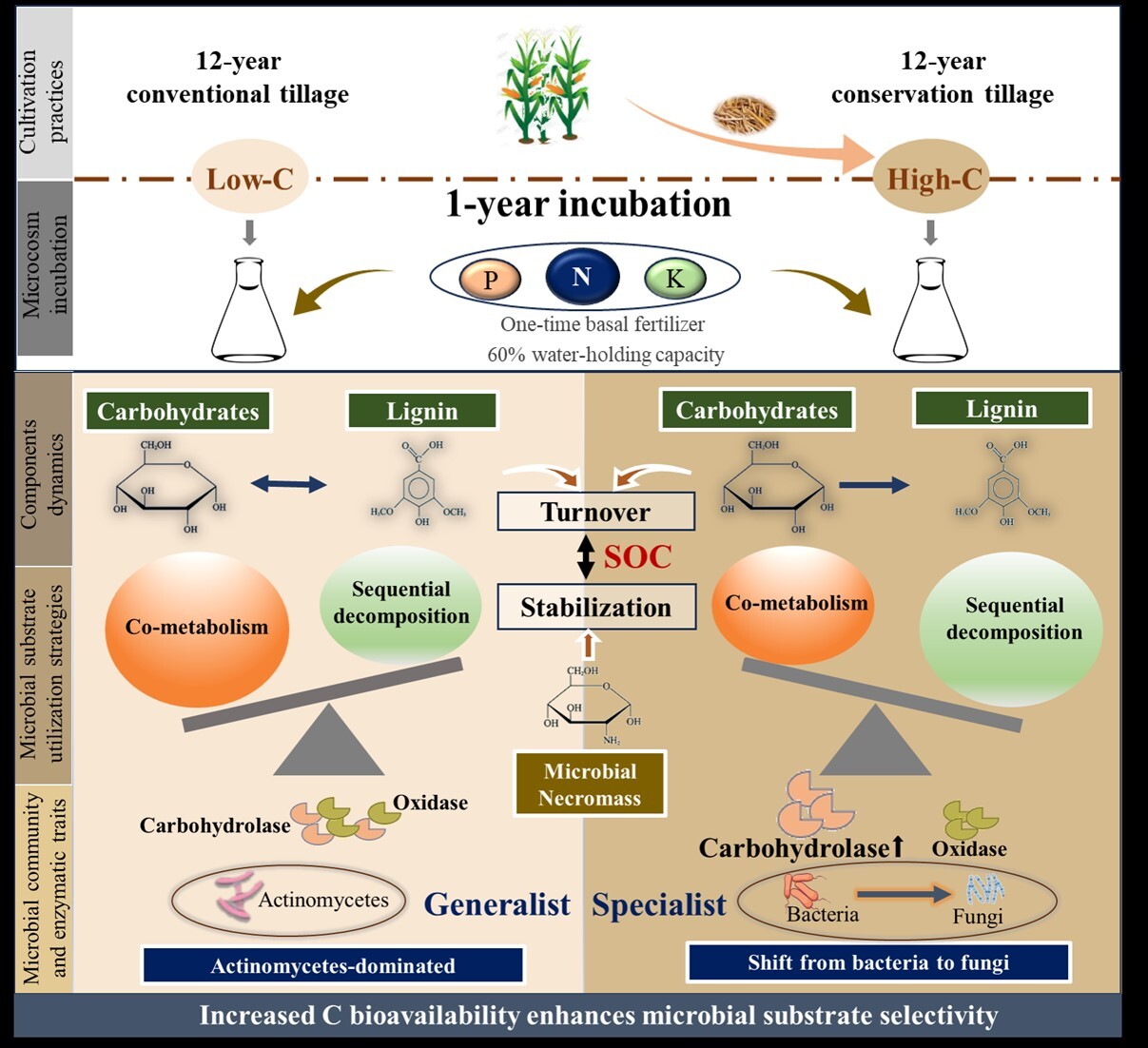
Figure 1. Soil samples collected from long-term conservation tillage fields were used to analyze microbial regulation of soil organic carbon decomposition (Image by ZHU Xuefeng).
