

RESEARCH NEWS
-
How Do Aggregates of Different Sizes Mediate Soil-Plant Relationship?The researchers (Associate Prof. Wang Ruzhen, Prof. Jiang Yong and Ph.D. student WU Hui) found that there was a significant correlation between plant characteristics (biomass and species richness) and macro-aggregate properties (ratio of available nutrients to eubacteria) under the nitrogen addition and mowing treatment.Jan 22, 2021
-
 Assessment of the Spatial Ecological Risk and Human Health Risk for Contaminated Soil in Oiled FieldsSoil total petroleum hydrocarbon (TPH) and Polycyclic aromatic hydrocarbons (PAHs) pollution in oiled fields is a worldwide environmental problem. Accumulation of TPHs and PAHs in the soils was led by the crude oil exploitation. It caused the spatial ecological risk and human health risk.Jan 08, 2021
-
Researchers Establish An Advanced Abio-combination Method for Rapid As Removal from As-Mn-rich AMD and Stable Final SolidsIn a new study published in Journal of Hazardous Materials on January 5, a research group led by Prof. JIA Yongfeng and WANG Shaofeng from Institute of Applied Ecology, Chinese Academy of Sciences has made great progress in an advanced abiotic oxidation-precipitation technology for fast efficient As removal from high-As(III)-Mn(II) AMD and low As-leaching solid waste.Jan 05, 2021
-
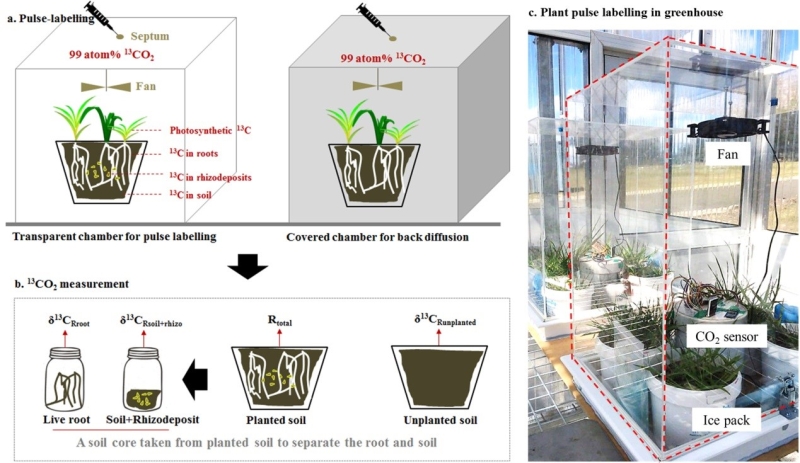 A Novel Method to Quantify the Decomposition of RhizodepositsRecently, Prof. Yong Jiang’s Lab from the Institute of Applied Ecology of Chinese Academy of Sciences, used a novel approach to separate soil respiration into root respiration, decomposition of rhizodeposit C, and decomposition of soil organic C (SOC).Dec 28, 2020
-
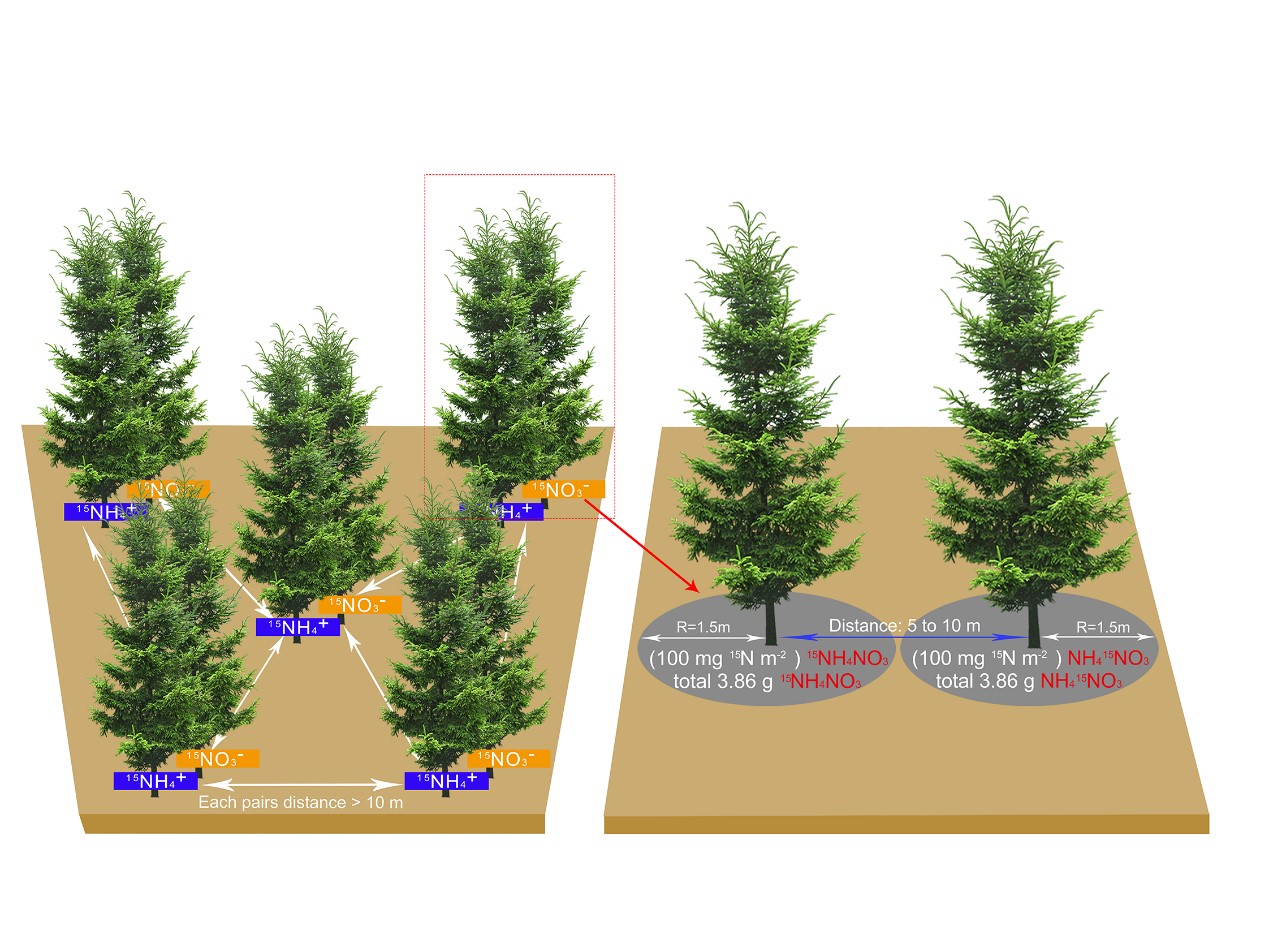 Scientists Find the Nitrogen Uptake Strategy of Mature Conifers in Northeast ChinaProf. Yunting Fang’s lab from the Institute of Applied Ecology of Chinese Academy of Sciences, therefore, first conducted an in situ whole tree 15N labelling experiment (15NH4+ vs. 15NO3-) (Fig 1) to investigate the N uptake strategy of four mature conifers (Pinus koraiensis, Pinus Sylvestris, Picea koraiensis, and Larix olgensis) in Northeast China.Dec 14, 2020
-
 Critical Minority of Large-diameter Trees Are More Important than Plant Diversity for Driving Forest DynamicsLarge old trees are keystone structures in forests, woodlands, savannas, agricultural landscapes, and urban areas, and play unique ecological roles not provided by younger, smaller trees.Nov 24, 2020
-
 Unignorable photodegradation: Solar radiation is accelerating carbon cycle process of temperate forest ecosystemsLitter decomposition is critical for carbon (C) cycling in terrestrial ecosystems. Sunlight, as the essential energy for the biogeochemical cycling, can directly break down natural organic matter and accelerate decomposition through photodegradation. However, the role of photodegradation in litter decomposition has been neglected especially in productive mesic ecosystems, where litter is exposed to a heterogeneous radiation environment. Obtaining a more-complete picture of the drivers of litter decay is key to predicting how terrestrial C and nutrient cycles respond to climate changes.Nov 18, 2020
-
 Hydraulic Failure Is Involved in the Decline of Sand-fixing Salix Gordejevii ShrubsA research team led by Prof. Dr. Guangyou Hao from the Institute of Applied Ecology of the Chinese Academy of Sciences measured the xylem hydraulics, sap flow, water relations and non-structural carbohydrate reserves for S. gordejevii plants that respectively inhabited interdune, leeward and windward positions of active dunes with contrasting soil water regimes.Nov 17, 2020
-
 Increasing Effects of Remnant Seed Sources on Post-volcanic-eruption Forest Landscape RecoveryVolcano eruption is a catastrophic disturbance, which can destroy almost all forest vegetation, forcing forest succession to restart. Post-volcanic-eruption forest landscape recovery is largely driven by available seed sources and seed dispersal pattern.Nov 12, 2020
-
 Researchers Firstly Uncover Viral Abundance and Diversity in Oil ReservoirViruses are considered to be the most abundant and diverse organisms in the world. They are ubiquitous in soil, ocean, river, wetland and other ecosystems, and play important roles in regulating structure and function of ecosystems.Oct 23, 2020
