

RESEARCH NEWS
-
 Revealing the Quantitative Relationship between Urban Atmospheric Particulate Matter Concentration and Natural and Human Factors in Central Heating AreasResearchers from the Institute of Applied Ecology (IAE) of the Chinese Academy of Sciences (CAS) used wearable equipment to monitor the concentrations of UPM (PM1, PM2.5, and PM10) in selected typical areas of Shenyang City, analyzed the contributions and marginal effects of multiple influences on UPM by random forest model combined with land use and point-of-interest data, in both heating and non-heating seasons.Oct 21, 2022
 -
Seeds are Most Difficult to be Buried by Wind on a Substrate Consisting Mainly of Medium-sized Particles, Researchers SayIn view of this, Prof. LIU Zhimin and his doctoral student ZONG Lu conducted a wind tunnel experiment and examined the impacts of wind speed, type of substratum (four pure substrates with particle sizes ranging from 89 μm to 25000 μm and seven mixtures of them) and diaspore traits on seed burial.Oct 08, 2022
-
 Researchers Discover New Dehalogenimonas sp. Strain Capable of Driving Dechlorination of DiclofenacResearch scientist YAN Jun and associate researcher LI Xiuying of the Environmental Microbial Ecology Group at the Institute of Applied Ecology (IAE) of the Chinese Academy of Sciences (CAS) established an anaerobic microbial enrichment culture using river sediments polluted by Diclofenac.Sep 14, 2022
 -
Fungi and Insect Herbivores Affect Herb Diversity Depending on Species Traits of the Herbs and Neighbouring Tree CompositionResearch scientist WANG Xugao and Dr. JIA Shihong from the Natural Forest Ecology Group of the Institute of Applied Ecology (IAE) of the Chinese Academy of Sciences (CAS) recently published their new findings on forest herb diversity maintenance.Sep 14, 2022
-
 New Study Uncovers the Regulatory Effects of El Ni#n;o–Southern Oscillation (ENSO) on Temperate Forests’ Seed and Leaf FallTo reveal how ENSO affects the temporal variation of species-level seed and leaf fall, researchers from Institute of Applied Ecology Chinese Academy of Sciences estimated the relationships among ENSO, local climate, and litterfall, using a 12-year data set of seed and leaf fall in a temperate forest of northeast China, with corresponding local climatic data (relative humidity and precipitation) and two ENSO indices (ENSO12 and ENSO34).Sep 13, 2022
 -
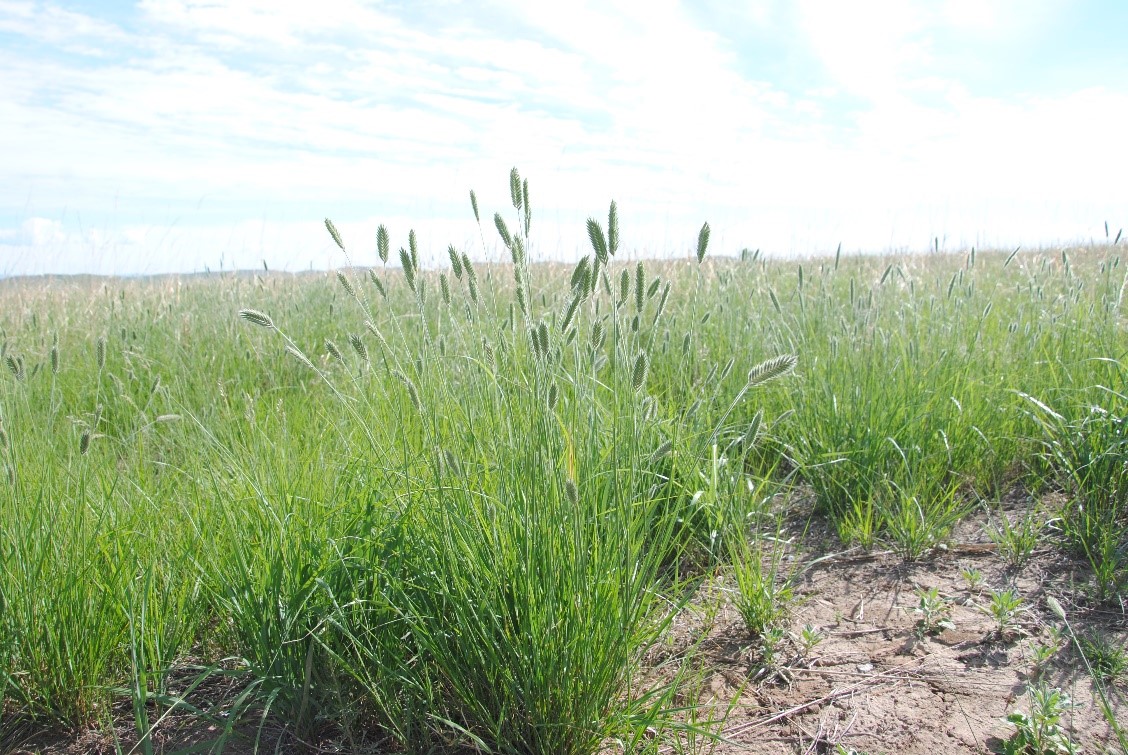 Variable Responses of Seed Traits to Extreme Drought Do Not Preclude Their Strong Relationships with Drought SensitivityTo address this knowledge gap, a research team from Institute of Applied Ecology of Chinese Academy of Sciences reduced growing season precipitation amount for four years across five grasslands of North China and assessed the responses of seed traits and grassland productivity to extreme drought. Surprisingly, the researchers found that there are variable effects of extreme drought on community seed trait means and diversity over space and time. However, the researchers observed a negative relationship between drought-induced reductions in grassland productivity and one key seed trait, mean seed-coat thickness.Sep 01, 2022
 -
Release of Nitric and Nitrous Oxides in Relation to Soil Moisture in Subtropical Forests in Southwest ChinaDr. Kang Ronghua, research scientist of the Institute of Applied Ecology of the Chinese Academy of Sciences (CAS), together with Thomas Behrendt of the Max Planck Institute for Biogeochemistry and Peter Dorsch of the Norwegian University of Life Sciences, collected well-drained hill slope soils (HS soils) and wet soils of the groundwater discharge zone (GDZ soils) from a subtropical forest in southwest China, and evaluated the rates of NO and N2O release following soil drying.Aug 25, 2022
-
Blue Light is Key Factor Affecting Litter PhotodegradationDr. WANG Qingwei from the Institute of Applied Ecology (IAE) of the Chinese Academy of Sciences (CAS), together with his foreign colleagues, has revealed that blue light is the key factor affecting litter photodegradation.Aug 25, 2022
-
Researchers Suggest Better Understanding of Below-ground Carbon Allocation and Its Efficiency for Nutrient AcquisitionPlants allocate large amounts of photosynthetic carbon metabolites to roots and soil and thereby rely on the root-soil-microbe interactions to acquire soil nutrients such as nitrogen (N) and phosphorus (P) for aboveground growth.Aug 23, 2022
-
Non-growing-season Rhizosphere Priming Effect MattersProf. Wang Peng and assistant researcher Lu Jiayu from the Underground Ecological Process Group of the Institute of Applied Ecology (IAE) of the Chinese Academy of Sciences (CAS) recently quantified RPEs of four perennial herbs in a non-growing season, that is, after leaf senescence and before shoot regrowth.Aug 23, 2022
