

RESEARCH NEWS
-
 Interaction Between Climatic Factors and Timescale Affect the Result of Assessing Extreme Drought in ChinaRecently, Landscape Processes Group from the Institute of Applied Ecology (IAE) of the Chinese Academy of Sciences (CAS) revealed how climate and timescale individually and interactively alter EDF at multiple temporal and spatial scales in conterminous China.Aug 23, 2021
 -
How Does Harvest Intensity Affect the Sustainable Utilization of Non-timber Forest Products?Non-timber forest products (NTFPs) are very important for local forest dwellers to increase their income. The growing demand for NTFPs resources with high economic value may lead to disorderly utilization and over-exploitation.Aug 23, 2021
-
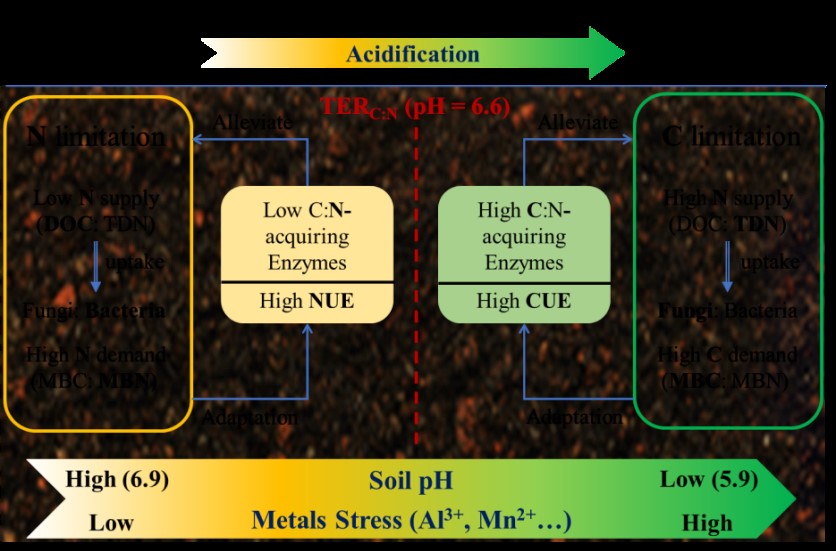 How Do Microbial Communities Adapt to Soil Acidification?Temperate grasslands in northern China have experienced extreme soil acidification in last 30 years due to increasing acid deposition and unsustainable management. Long-term soil acidification may lead to leaching of base cations, nutrient imbalances and metal stress for soil biomes.Aug 17, 2021
 -
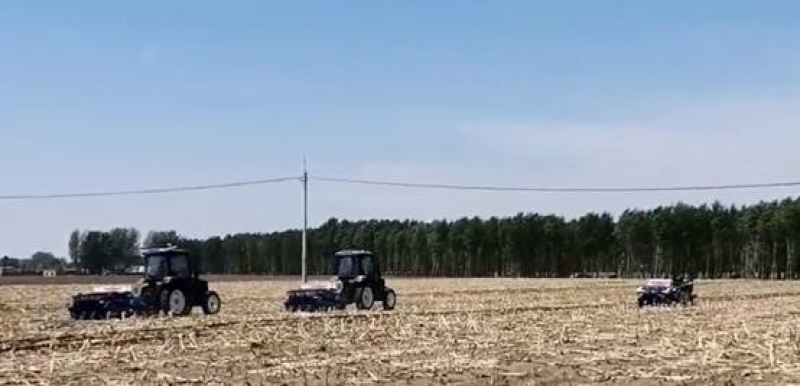 No-till Farming Should Accompany Crop Residue Mulching For Improving Nitrogen Use EfficiencyMaize stover have been widely proposed as essential renewable biofuels for clean energy. However, removing crop residue for bioenergy feedstocks may adversely offset the benefits of crop residue mulching, such as improve soil health, enhance crop productivity, and alleviate global climate change. Understanding crop yields and soil fertility in response to different levels of crop residue mulching in long-term no-till farming systems is pivotal for local agricultural management.Aug 17, 2021
 -
 Researchers Reveal the Responses of Grassland Functions to Drought EventIn our country, grasslands is one of important ecosystem and is an important ecological barrier, and green animal husbandry production base. The ecosystem plays an important role in maintaining national ecological security, food security and even global ecological balance.Aug 13, 2021
 -
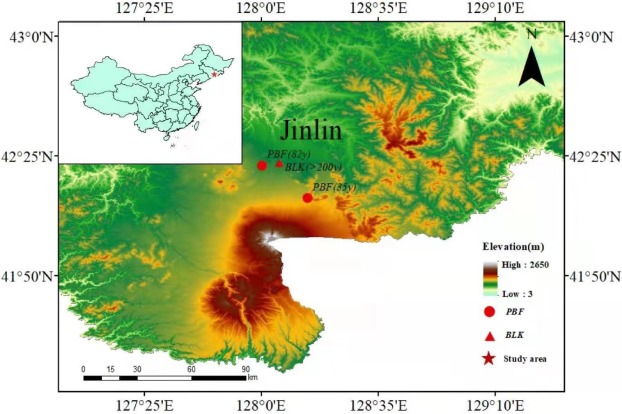 Microbial Sieving Effects on Vertical Differentiation of Nutrient Availability along Forest SuccessionAlong forest succession stages, soil nutrient status always presents vertical stratification along soil horizons. However, the mechanism underlying such soil depth-dependence is still a universally open question.Aug 13, 2021
 -
Sunlight Drives Leaf Mass Area Depending on Spectral CompositionPlant functional traits generally reflect the trade-off strategy between plant resource acquisition and investment under environmental changes. Plant leaves, as the main organ that converts inorganic carbon into organic carbon. Leaf mass area (the leaf mass per unit area, LMA), the core trait of "Leaf Economics Spectrum" theory, characterizes the morphological, physiological and biochemical functions of the leaves, as well as the functions and processes of the ecosystem. Therefore, a better understanding of the abiotic driving factors of LMA is the key to predict how terrestrial ecosystem functions respond to climate change.Aug 11, 2021
-
Priming Effect Caused by Root Litter Varies with Root OrderDespite the fact that plant litter contributes more to soil organic carbon storage, plant litter can influence soil organic crbon decomposition via the priming effect. While our current understanding of priming effect induced by plant litter is overwhelmingly from studies with leaf litter addition, we still know little about how root litter decomposes and subsequently the priming effect occurs until now.Jul 22, 2021
-
Long-term No-tillage with Crop Residue Application Could Improve Soil Nitrogen CyclingConventional tillage has been the common agricultural practices in the agroecosystem of northeastern China for a long period, with crop residues removed or burnt, which has caused serious soil degradation and threatened sustainable crop production. In recent years, no-tillage and crop residue application have been proposed as alternative forms of agriculture management in order to recover and improve soil quality. Nitrogen (N) cycling in cultivated land is highly affected by agricultural practices such as tillage and crop residue management.Jul 12, 2021
-
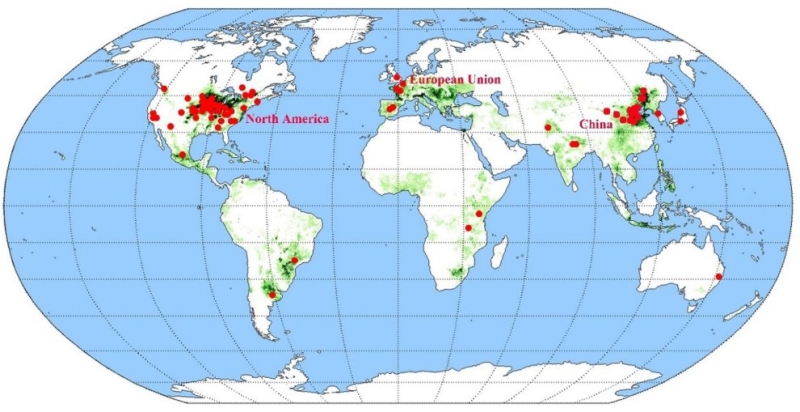 Scientists Conduct Meta-analysis of Literature Investigating Fate and Use Efficiency of Nitrogen Fertilizer in Maize Cropping SystemsThe application of nitrogen (N) fertilizer in farmland can significantly increase crop yields. But excessive application of N may decrease N utilization efficiency, increase N losses and cause environmental pollution. Quantifying the fate and use efficiency of N fertilizers is essential for nitrogen fertilizer management in farming systems. In order to achieve sustainable food production, researchers have developed different farming management regimes to increase crop yields and N use efficiency, and reduce environmental pollution caused by nitrogen losses. However, the fate and use efficiency of fertilizer N vary greatly across soil-climate regions and are affected by farming management regimes. Understanding the global and regional differences in N use efficiency and the factors controlling them can help us better manage N fertilizer application, improve resource utilization efficiency, and reduce environmental pollution caused by N losses.Jul 12, 2021
