

RESEARCH NEWS
-
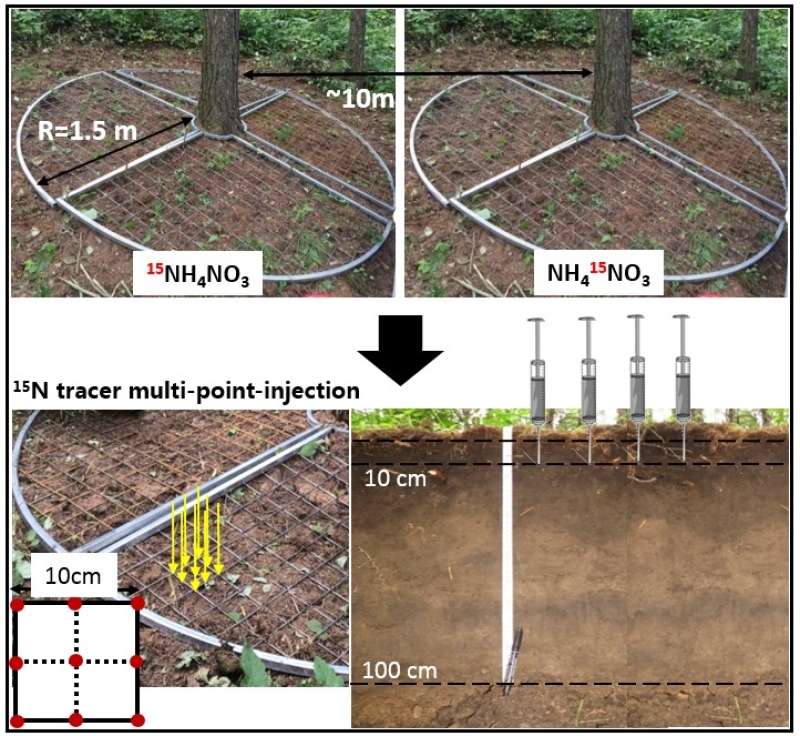 Researchers Develop and Improve the in Situ Paired 15N Labeling Technique to Study Mature Tree N Uptake PreferenceNitrogen (N) is often the limiting nutrient for plant photosynthesis and productivity in temperate forests. Variation in N uptake among different plant species is important to reduce competition and sustain biodiversity. N uptake preference refers to plants’ unequal uptake of different N forms in soils, i.e., the two dominant inorganic N forms of ammonium and nitrate. However currently we lack standard method to determine plant N uptake preference, especially for mature trees growing in the field.Jul 12, 2021
 -
Researches Reveal Sensitivity of Aboveground Biomass and Tree Species Composition of Boreal Forests in China to Climate ChangeThe climate change effects on boreal forests are more obvious than on other terrestrial ecosystems, and it is estimated that the temperature in boreal forests might rise at twice the rate of other ecosystems. It was shown that climate warming and changes in precipitation patterns can lead to changes in aboveground biomass and tree species composition of boreal forests. However, uncertainty in climate change prediction leads to large uncertainties in the prediction of biomass and tree species composition, which would be a challenge for forest managers to formulate measures to enhance the adaptation of forests to climate change impacts.May 31, 2021
-
Researchers Examine Uncertainty in Drought Assessment,Taking China as an ExampleIn view of this problem, assistant Prof. Ma Tianxiao, Prof. Liang Yu and their colleagues from the Landscape Process Group of the Institute of Applied Ecology, Chinese Academy of Sciences, used the data collected from 695 meteorological stations in China from 1970 to 2010 for drought assessment.May 31, 2021
-
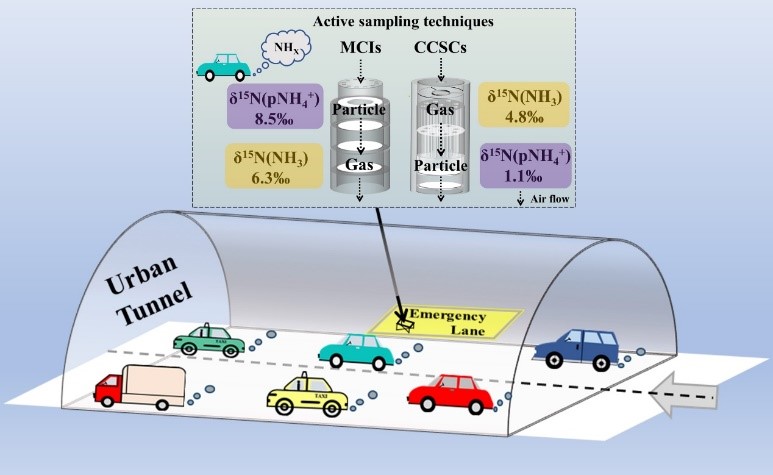 Characterizing the Nitrogen Isotope Composition of Ammonia from Vehicular Exhaust using Active Sampling TechniquesGlobal anthropogenic emissions of ammonia (NH3) has increased significantly in the recent years. In urban regions, emerging evidence suggests that vehicle emissions are an important source of NH3, which is an unintended consequence of the introduction of three-way catalytic converters (TWC) or selective catalytic reduction (SCR) equipped on gasoline/diesel vehicles to reduce NOx emission.May 24, 2021
 -
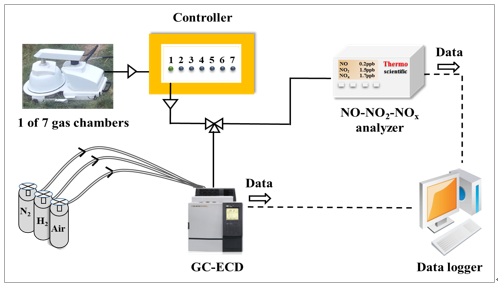 Intensified Droughts Will Affect N Gaseous Emissions in Rainfed AgricultureRainfed agriculture is one of the most common farming practices in Northeast China and the world, which is vulnerable to future climate change. Both NO and N2O are major contributors to atmospheric pollution and agriculture is a major source of both gaseous N. Seasonal variation of precipitation input can affect plant growth, soil microbial activities, and emissions of NO and N2O. However, the complexity of the mechanisms and the temporal and spatial variations relating to the emissions of NO and N2O in rainfed ecosystem are unclear.May 24, 2021
 -
Researchers Conduct Atmospheric Nitrate Deposition Measurement and Nitrogen Source AnalysisSince the Industrial Revolution, human activities have increased the emission of nitrogen oxides (NOx). NOx can promote the generation of ozone and particle matters, and increase nitrogen deposition in the atmosphere.May 19, 2021
-
 Different Approaches for Quantifying Crop Nitrogen Use Efficiency May Result in Huge Difference in NUE EstimatesCrop nitrogen use efficiency (NUE) refers to the proportion of nitrogen in fertilisers that is absorbed and used by crops, which is an important indicator to evaluate fertiliser utilisation efficiency and environmental impact of nitrogen input in farmland. However, different NUE quantification approaches produce quite different NUE values, which is not conducive to comparison between different studies.May 19, 2021
 -
 Shifts in Forest Composition Would Reduce the Direct Effects of Climate Change on Fire Regimes in the Boreal Forests of Northeastern ChinaFire is one of the major natural disturbances in the terrestrial ecosystem and profoundly impacts the structure and functions of forest ecosystems. With increases in temperature and extreme weather events, fire occurrence and burned area in boreal forests have increased markedly over past decades.May 07, 2021
 -
 Above-and Below-ground Biodiversity Differently Mediate the Effects of Selective Logging on Temperate Forest Multifunctionality, Study FindsA new study published in Global Change Biology recently confirmed that selective logging in a reasonable way may make better use of abiotic resources in the forests, promote the growth of preserved trees, improve the overall functionality of the ecosystem, and increase tree species diversity and soil microbial diversity.Apr 25, 2021
 -
Adopting Conservation Tillage and Inhibitor Application as a Win-win Solution in Agro-ecosystem of Northeast ChinaBased on a continuous 9-year no-tillage farmland, a research team from the Institute of Applied Ecology of the Chinese Academy of Sciences (CAS) conducted an in-situ 15N-labeled micro-plot to investigate the transformation characteristics and fate of fertilizer N in soil-crop system in response to maize straw mulching and inhibitor application.Apr 23, 2021
